The Day a Baby Elephant Hugged Me!!!

When my father went to Phuket for his company’s annual sales meeting, my mother and I joined him for the trip. One of the most exciting experiences during our visit was going to an elephant sanctuary. My father’s company had arranged this visit as a team-building activity for all the employees. 

As soon as we reached the sanctuary, I saw many elephants of different ages. Some were tiny babies, while some were very old. There were many caretakers looking after them with great love and care. A friendly guide accompanied us throughout the visit and explained everything about the elephants.

Feeding a Baby Elephant with Milk

Our first stop was the milk parlour. The guide told us that we would get a chance to feed baby elephants with milk. There were many bottles of milk available, and visitors could purchase one if they wanted to feed a baby elephant.

My father immediately bought a bottle for me.

Within a few minutes, the caretakers brought out four or five adorable baby elephants. I was so excited that I almost forgot to blink! I wanted to touch one of them, but my mother was a little worried because she wasn’t sure if it would be safe. My father has always loved animals, so he smiled and gently took me near one of the baby elephants.

The moment the baby elephant noticed the milk bottle in my hand, it came rushing towards me while happily wagging its tiny tail and moving its head from side to side. I had only seen baby elephants wWhen my father went to Phuket for his company’s annual sales meeting, my mother and I agging their tails in cartoons before. Seeing it happen in real life was magical!

The guide stood beside me and helped me place the bottle into the baby elephant’s mouth. It immediately started suckling the milk just like a human baby. It even made soft sucking sounds while drinking. Within a minute, the entire bottle was empty.
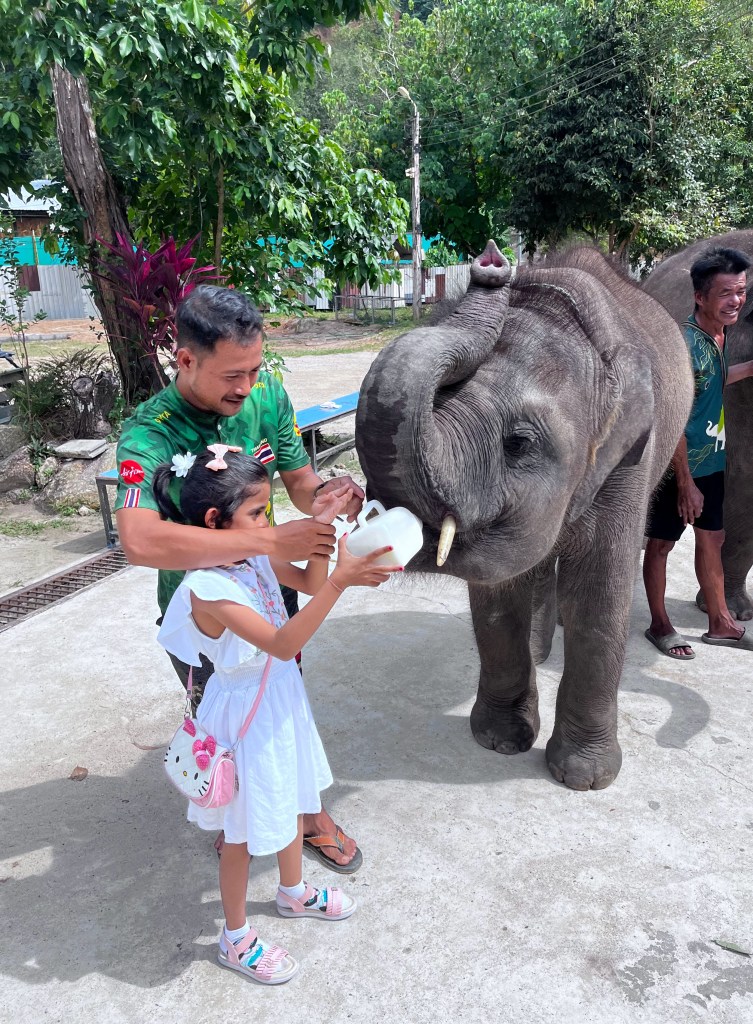
Then something very special happened.

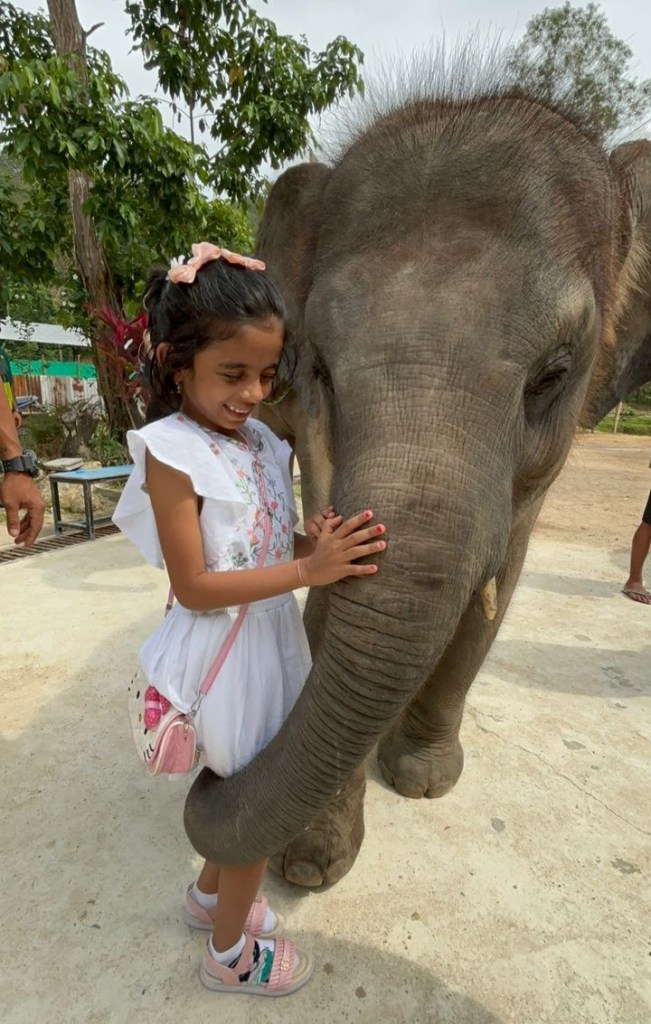
The baby elephant wrapped its trunk around me and gave me a big hug! I truly felt as if it was saying, “Thank you.” When my father went near it, the little elephant also gave him a warm hug. My father laughed and said, “He is just a sweet baby.”

That became one of my favourite moments of the entire trip.

Feeding Sugarcane

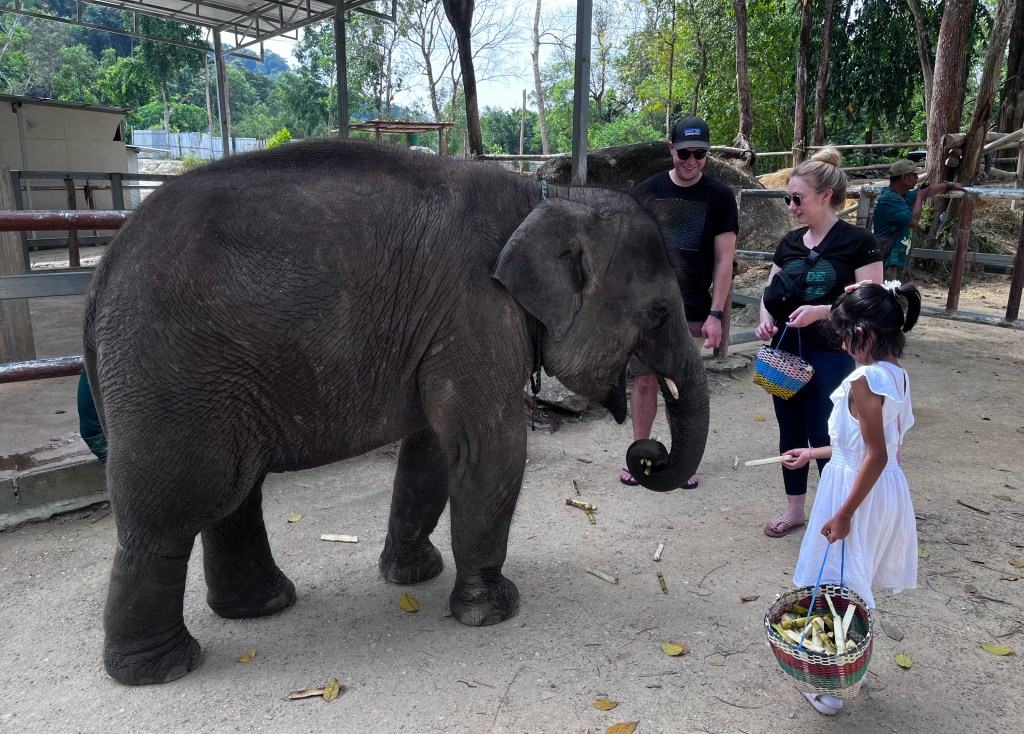
Next, we went to the sugarcane cutting station. We all helped cut fresh sugarcane for the elephants. My father filled two large baskets with sugarcane, while I carried a small basket specially for the baby elephants.

Many of my father’s colleagues were feeding the bigger elephants, but I wanted to find another baby elephant. Soon I found one waiting patiently. It gently picked up each piece of sugarcane with its trunk and carefully placed it into its mouth. Watching the trunk work like a hand was amazing.

While I was feeding it, my father pointed towards its beautiful white tusks and explained, “The tusks are not used for eating. The elephant has teeth inside its mouth for chewing.”

I learned something new that day!
A Mud Spa for Elephants

After everyone had finished feeding the elephants, our guide announced that it was time for the mud spa.

I looked at my father and asked, “Elephants are so big… do they also go to a spa?”

My father laughed and explained that the elephants would be covered with mud to cool their bodies. The mud also helps protect their skin and is very relaxing. In the wild, elephants naturally enjoy rolling in mud for the same reason.

We were each given a bucket full of mud. Some of the elephants sat down patiently while we gently spread the mud all over their bodies. When I touched the elephant, I noticed that its skin was very thick and rough, and its body hair felt stiff like tiny brushes. The elephants looked very calm and seemed to enjoy every moment.

My father joked, “If someone gave me such a mud spa, I would fall asleep immediately!” My mother laughed and agreed with him. I think the elephants probably felt the same way.

Bath Time!

After the spa, it was finally bath time. The elephants walked to a large bathing area where there were few water hoses and sprinklers. We happily sprayed water on the elephants to wash away all the mud.
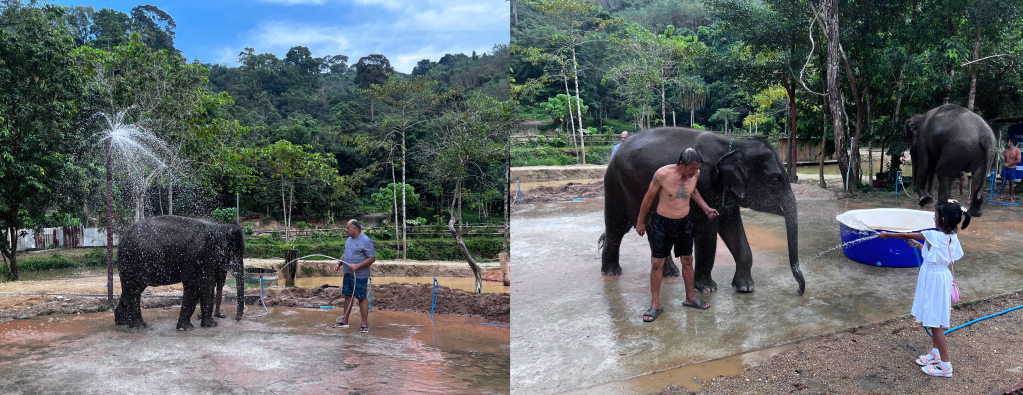
The elephants seemed to love it! They stood happily under the sprinklers while the cool water poured over them. Some even played with the water. Soon all the mud had washed away, and their skin looked shiny and clean again.

It was so much fun watching them enjoy their bath.

Finally, the guide thanked everyone and the caretakers gently led the elephants back to their resting area.

What I Learned

This visit taught me that baby elephants behave very much like human babies. They love drinking milk, make cute suckling sounds, enjoy cuddles, and even give warm hugs.

I also learned that mud baths are not just for fun—they help elephants cool down, protect their skin, and even heal small skin problems. Most importantly, I realized that elephants are gentle, intelligent, and emotional animals that deserve our love, care, and protection.

Meeting these gentle giants and spending time with them is a memory I will treasure forever.

Discovering Shrimp Farming in Andhra Pradesh 

This summer holiday, my father decided to take us to visit one of his college friends who lives in Bhimavaram, Andhra Pradesh. He told me that his friend helps farmers who do shrimp and fish farming. I was very excited about this trip.

We started our journey in the morning and reached Machilipatnam by afternoon. Machilipatnam has a beautiful beach (Manginapudi Beach), so we decided to stay there for one night and travel to Bhimavaram the next day. My father and I both love beaches. We enjoy the waves, the sand, and the fresh sea breeze. I had taken a small basket to collect seashells, but unfortunately it got washed away by the sea. Even then, we had a wonderful time at the beach.

The next day, we travelled to Bhimavaram and reached my father’s friend’s house around 6:30 PM. We met his family. He has two daughters, Devika and Sanvi. Sanvi and I played together. Later, Uncle took us to a nearby park where we enjoyed many activities. It had been a long day, and I fell asleep as soon as I had my dinner. 

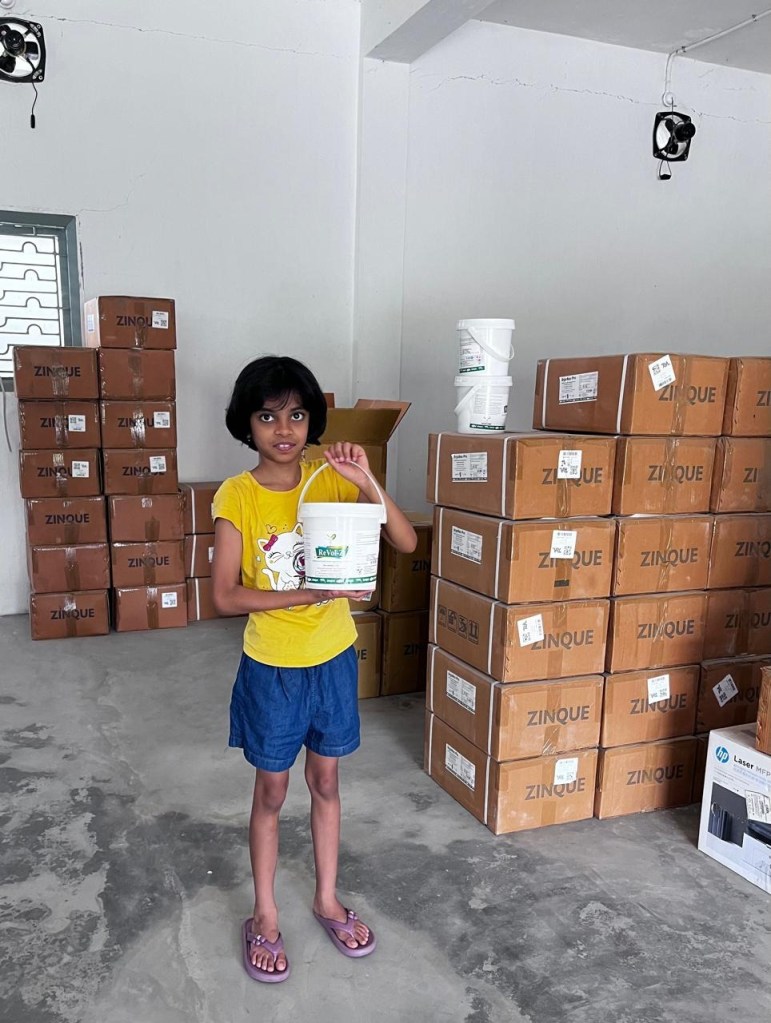
The next morning, Uncle and my father were ready by 8 o’clock. My father woke me up and packed a tiffin box for me. Aunty had prepared delicious idlis and pea curry. First, we visited Uncle’s warehouse where he stores shrimp and fish feed, medicines, and supplements. He explained some of the products and how farmers use them. Uncle had started this business only a few months ago, but he already knew many farmers because he had worked in a similar field before.

After loading some feed and supplements into his car, we started visiting farms. As we drove through the city, my father showed me many shops that sold feed, farming equipment, accessories, and laboratory testing services. Everything seemed connected to shrimp farming. Uncle told us that a large part of Bhimavaram’s economy depends on shrimp farming and related businesses. Many people have earned a good income by exporting shrimp and fish.

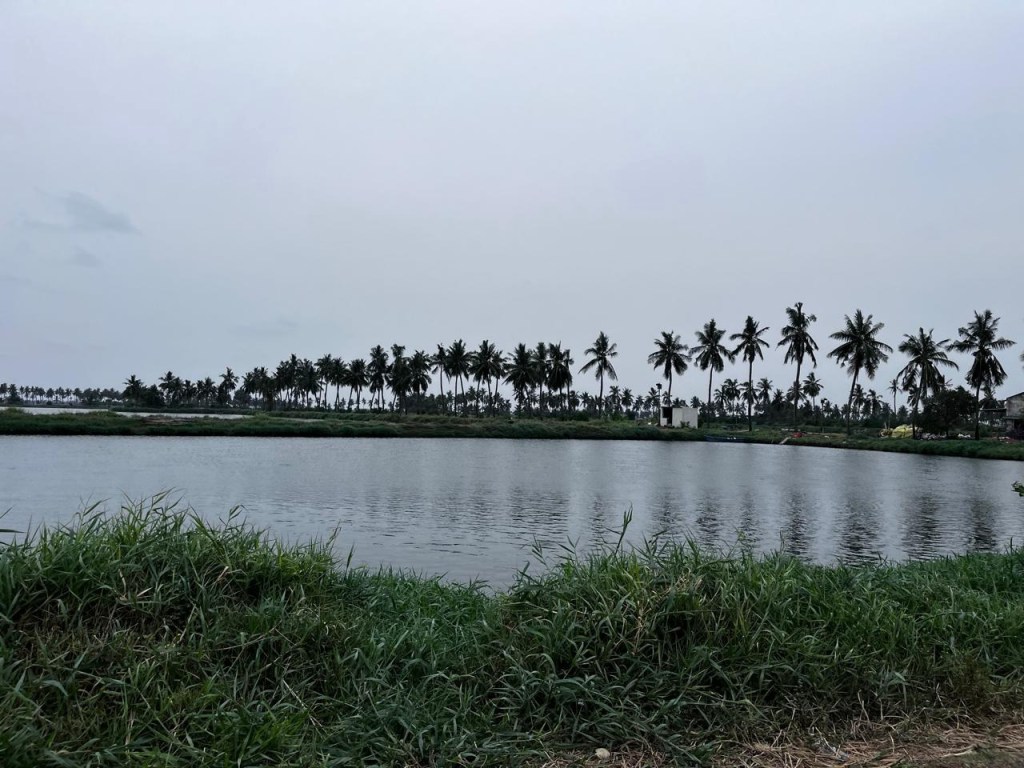
As we moved out of the city, I could see greenery everywhere. Coconut trees lined the roads, and there were ponds all around where shrimp farming was taking place. Near every pond was a small hut where the caretaker stayed to look after the farm. Around these huts, I saw cows, goats, chickens, ducks, dogs, and other animals.

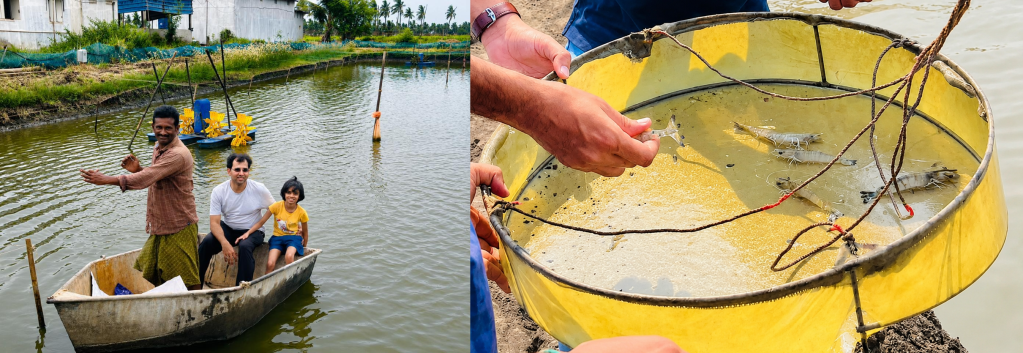
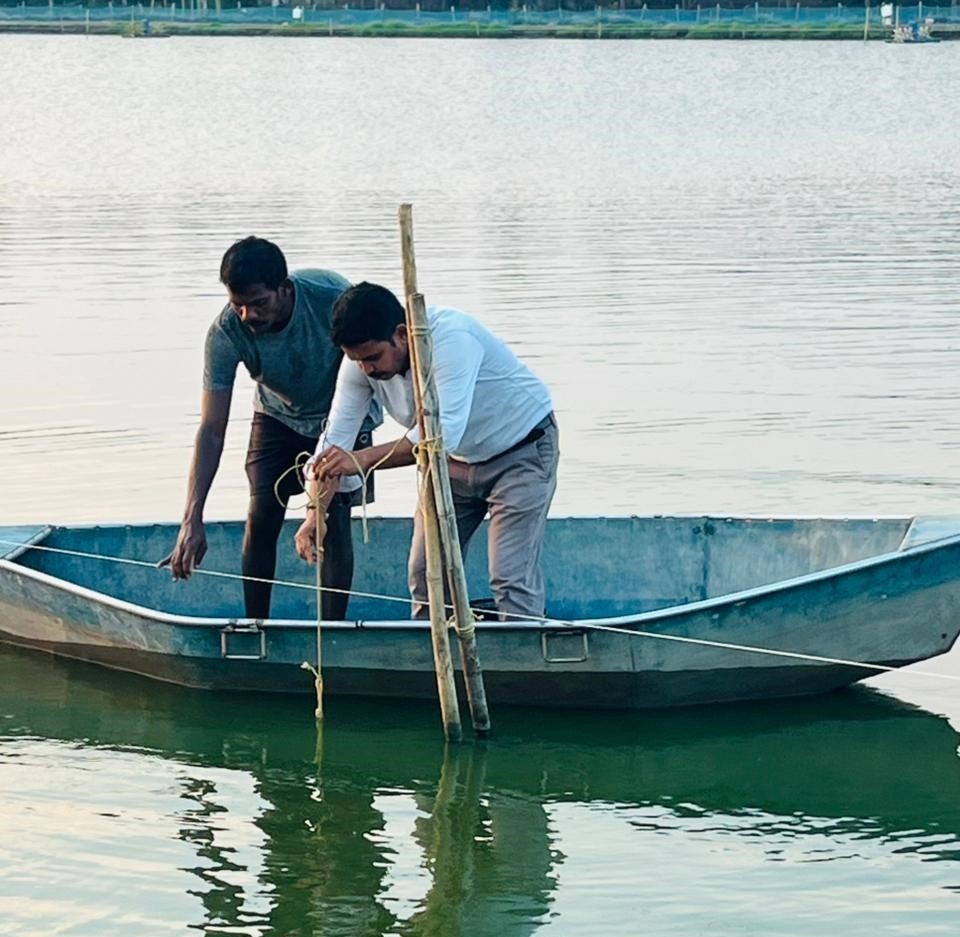
We stopped at one of the farms. The caretaker was about to feed the shrimp. My father asked if we could go into the pond on a small boat. After speaking with the caretaker, Uncle got permission for us. Normally, visitors are not allowed inside because farmers want to avoid contamination, but they made an exception because they saw how excited I was.

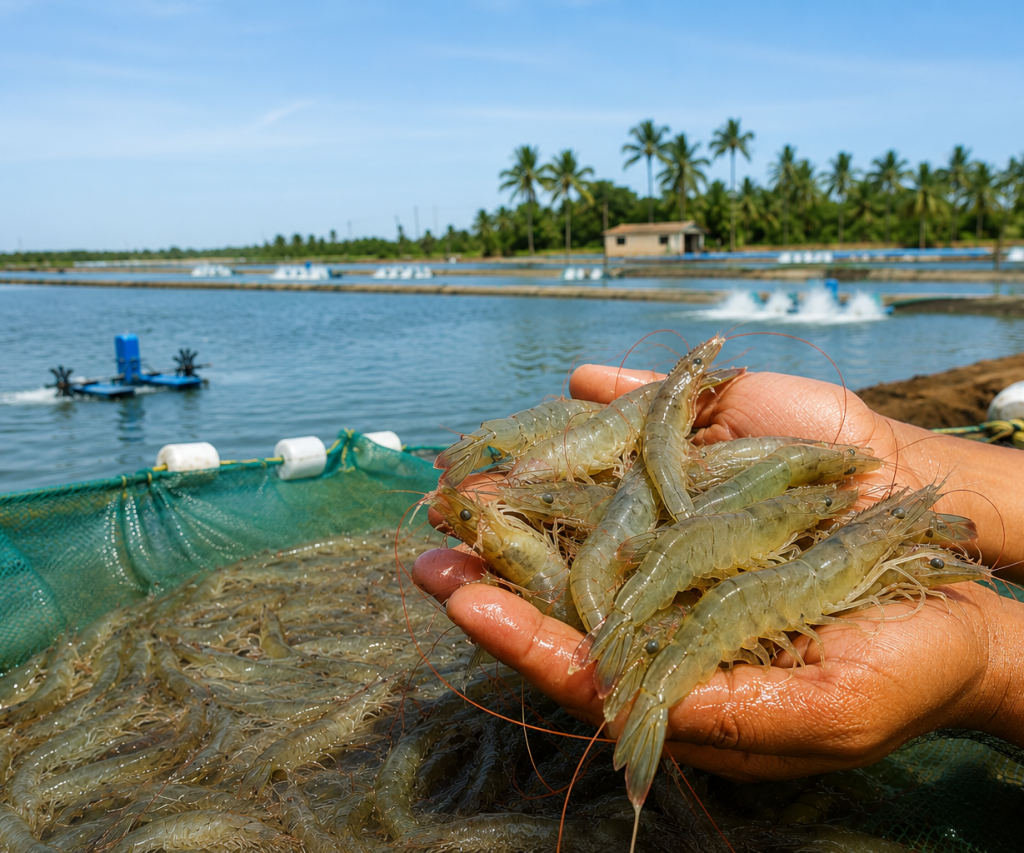
My father and I got into a small metal boat along with the caretaker. He carried a bag of feed and used a rope to move the boat around the pond. At several marked locations, he threw feed into the water. Then he pulled up a net tray from beneath the pond and placed some feed inside it before lowering it again. My father asked why he was doing this. The caretaker explained that the trays help farmers check whether the shrimp are feeding properly. When they return later, they inspect the trays. If the feed is gone, the shrimp are eating well. If feed remains, it may indicate a problem. There were about ten such feeding points around the pond.

Whenever the caretaker lifted a tray, I could see many shrimp inside it. He even allowed me to hold one. I carefully picked up a shrimp, but suddenly it jumped in my hand. It felt like a small electric shock, and I immediately dropped it. I shouted in surprise. My father laughed and explained that the shrimp was simply trying to escape. The caretaker also laughed at my reaction.

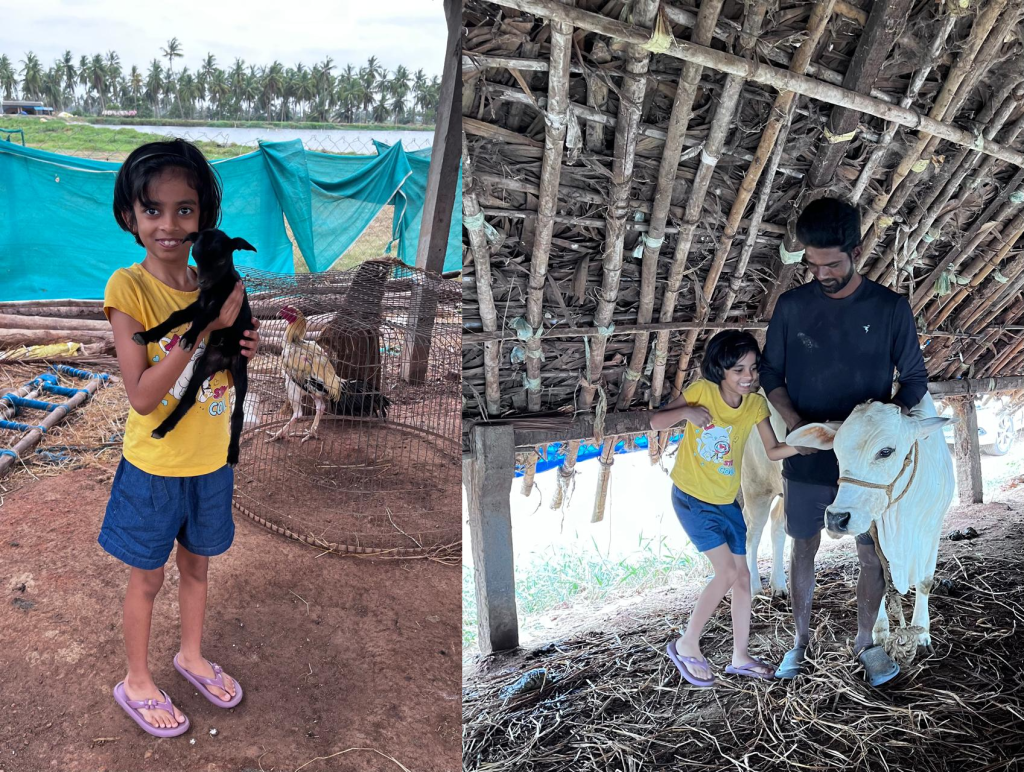
After feeding was finished, we returned to the hut. There were goats, chickens, roosters, cows, and several baby goats. I could not resist holding the baby goats. Their mother kept making noises and did not want me to come near them. My father helped me hold one of the baby goat carefully. It very small and adorable.

Next, we visited the cowshed. One cow started walking towards me, and I became frightened. A farm worker quickly came and held her. He explained that the farm owner’s daughter, who is about my age, often plays with the cow. The cow may have thought I was her. My father gently patted the cow, and she tried to lick his hand. He told me that animals can sense kindness and often respond with affection.

The farm also had some very large roosters. Uncle told us that these roosters are sold for high prices because they are used in traditional cockfighting events during certain festivals. I remembered seeing pictures of cockfights at our hotel in Machilipatnam.

By then, I was hungry. When I opened my tiffin box, a small puppy came near me. I shared some idli with the puppy, and we enjoyed our breakfast together. While we were there, Uncle received a call from a farmer who was facing a problem at his pond. We immediately drove to the farm. Uncle inspected the pond and spent some time finding the cause of the issue. After checking everything, he explained that the ammonia level in the water had increased. He suggested the right treatment and advised the farmer on what product to use. Since Uncle had the required material in his warehouse, he asked the farmer to collect it later that day. I realized that Uncle was not just selling products. He was helping farmers solve problems and protect their livelihoods. He was a trusted guide for many farmers in the area.

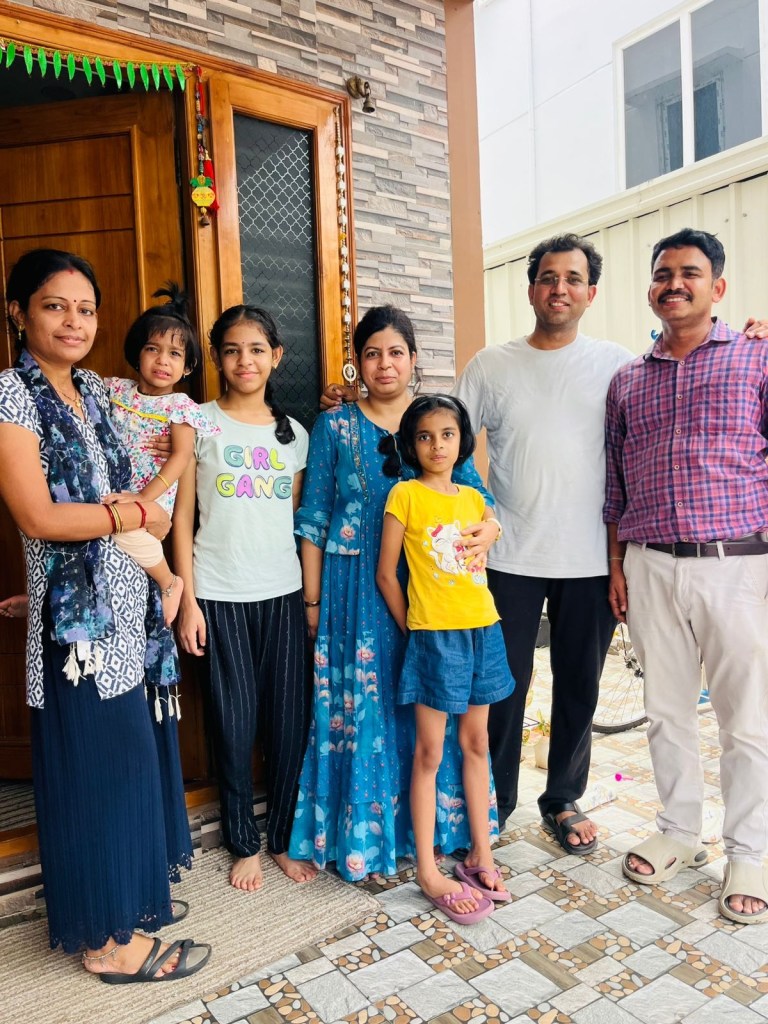
Later, we returned to Uncle’s house. Aunty brought a ripe papaya from her garden, and we all enjoyed eating it together. It was very sweet and delicious. Before leaving, both families took some photographs together.

This visit taught me that different regions of India have different types of farming based on the resources available there. I also learned how important people like Naresh Uncle are. They support farmers, help solve their problems, and play an important role in making farming successful. I was amazed to see the large shrimp ponds, the feeding process, and the many animals living around the farms. I also learned that farming is not easy and requires a lot of knowledge, patience, and care. This trip was both fun and educational, and it gave me a new respect for farmers and the people who help them. I will always remember my exciting visit to the shrimp farms of Bhimavaram.

Dancing with My Superhero Papa

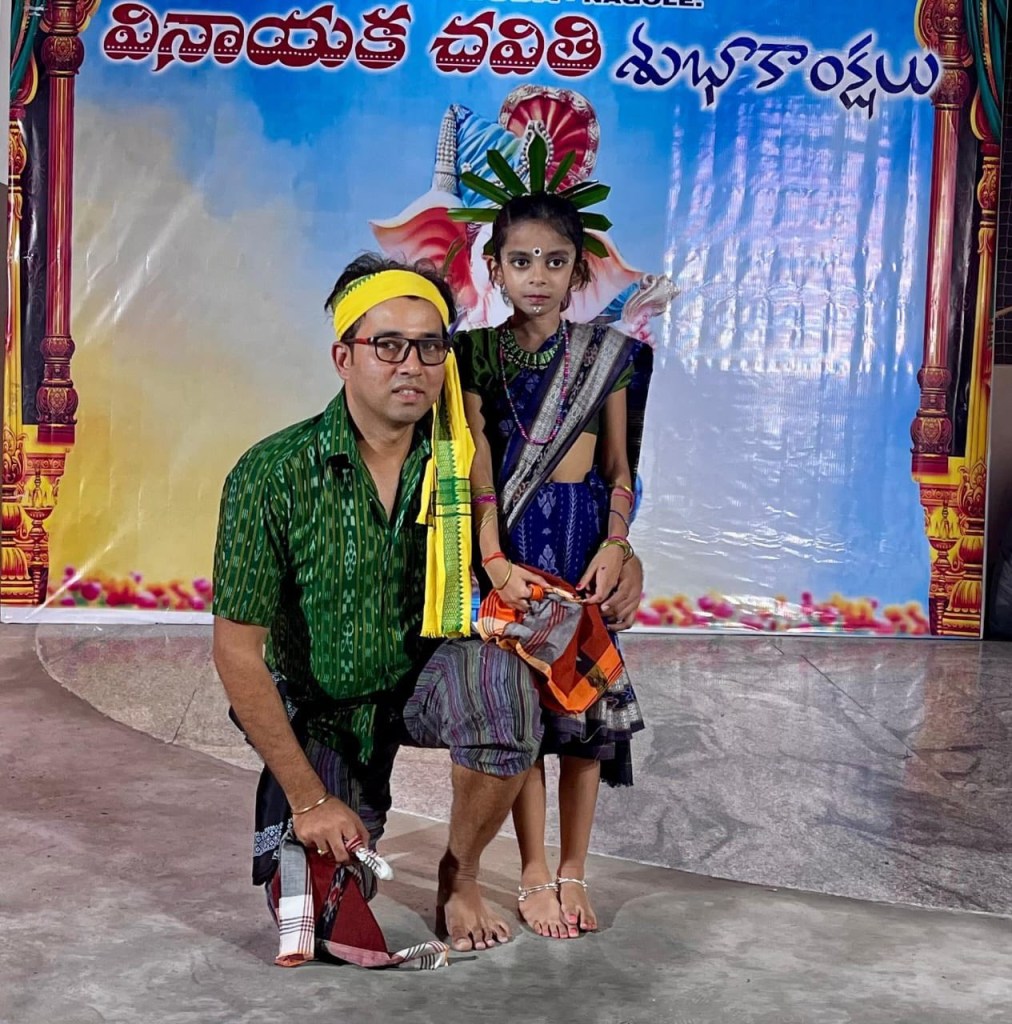
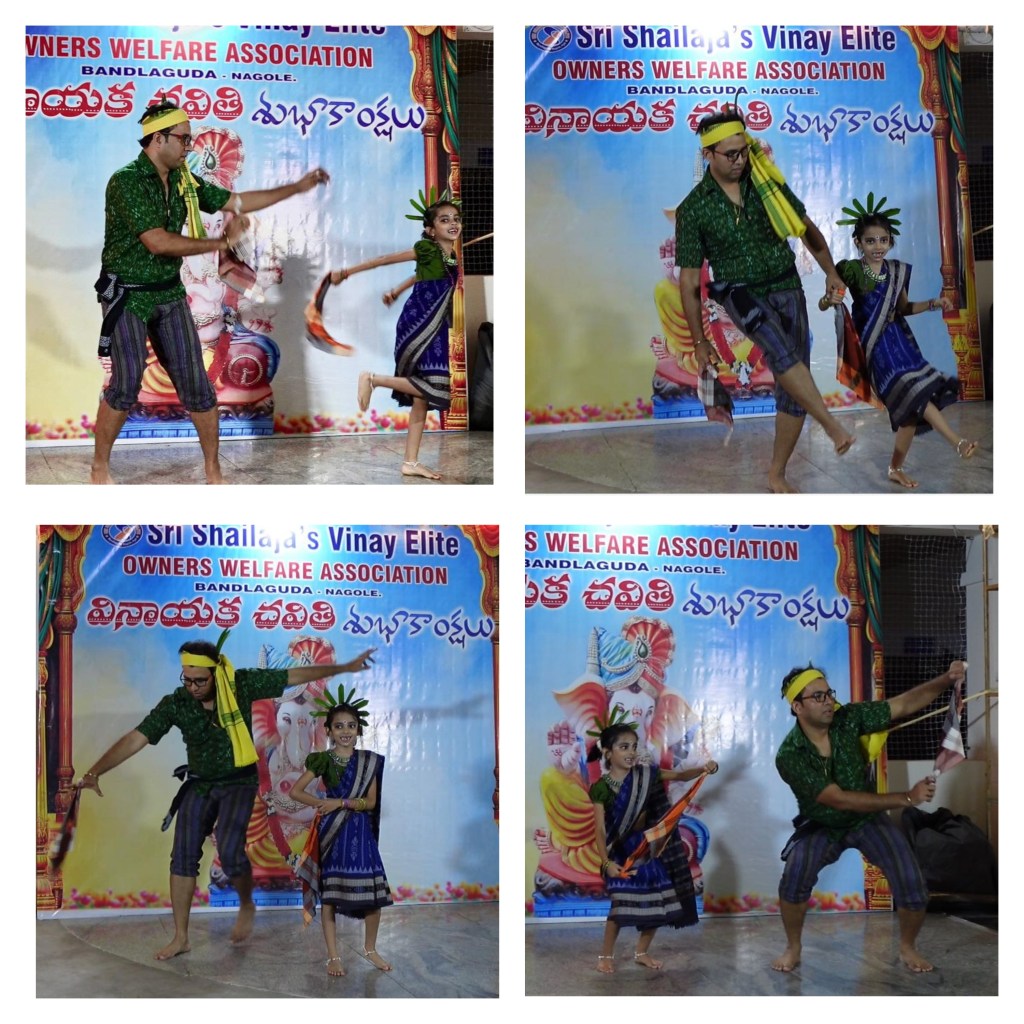
Every year we celebrate Ganesha Chaturthi in our apartment. The celebration goes on for 7 to 9 days. All the families in our apartment come together every evening for puja. After the puja, we usually have cultural programs and fun games. Last year, my Papa and I decided to give a dance performance together. We took a long time to choose the song. We listened to many Bollywood, Tollywood, and even Hollywood songs. Finally, we decided to perform a folk dance from Odisha called Sambalpuri dance. The song we chose was the famous Sambalpuri song “Rangabati Rangabati.” My Papa told me that this song was popular even when he was a school-going boy.

We listened to the song many times. Since I could not understand Sambalpuri language, my father explained some of the meanings to me. But more than the meaning, I loved the beats and music. Whenever the song played, I just wanted to dance. We started practicing 10 days before our performance. Every evening we practiced for 30 minutes in front of our TV. Some dance steps were difficult for me, so my Papa taught me some easy and fun steps.

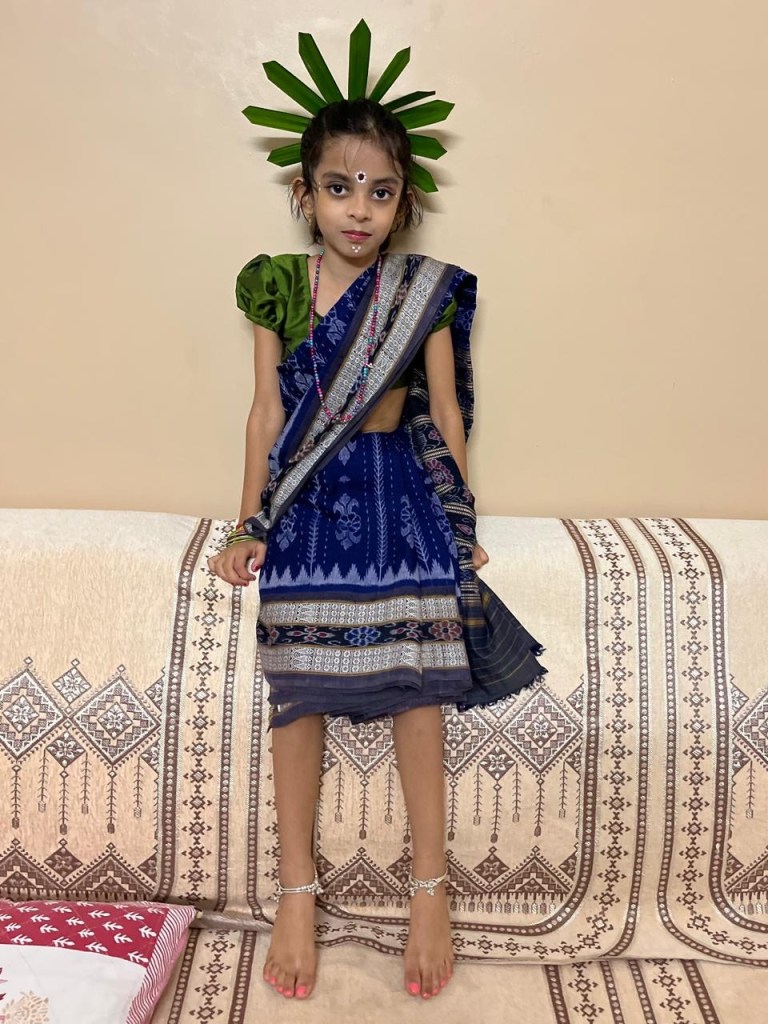
When my father visited my grandparents’ house few days back, he brought my grandmother’s Sambalpuri saree for me. The saree was around 30 to 40 years old, but it still looked so beautiful. Sambalpuri sarees are World famous. The cloth is soft, colorful, and very pretty. I loved the bright colors and beautiful patterns made by the talented weavers.  My father also bought Sambalpuri cloth for himself and stitched a nice shirt from it. We knew that with our Sambalpuri song and Sambalpuri dress, we were going to rock the stage!

On the evening of the performance, my mother helped me with my makeup. My father took a Lady palm plant leaf from the garden and carefully cut that to decorate my hair. It gave me a tribal look. After getting ready, we went downstairs, and everyone was surprised to see us in our beautiful traditional dress. They never expected us to perform like this. Everyone clapped when we went onto the stage.

Then the music started, and so did our dance. We tried our best and enjoyed every moment. Sometimes I forgot my steps, and my Papa quietly showed me what to do next. I danced with all my heart, and so did my Papa. I have never seen the fathers of my friends dancing on stage like this. But my Papa is my superhero. He can do anything. He told me that dancing with me on stage was one of his dreams, and this was the perfect occasion for it.

After our performance, all my friends came to me and told me how well I danced and how pretty I looked. All the uncles and aunties appreciated both me and my Papa. It was such a proud and happy moment for us.

This became one of the most wonderful memories for our family. My mother recorded our dance video, and sometimes we still watch it together on our TV and feel very happy.

Secrets Under the Microscope

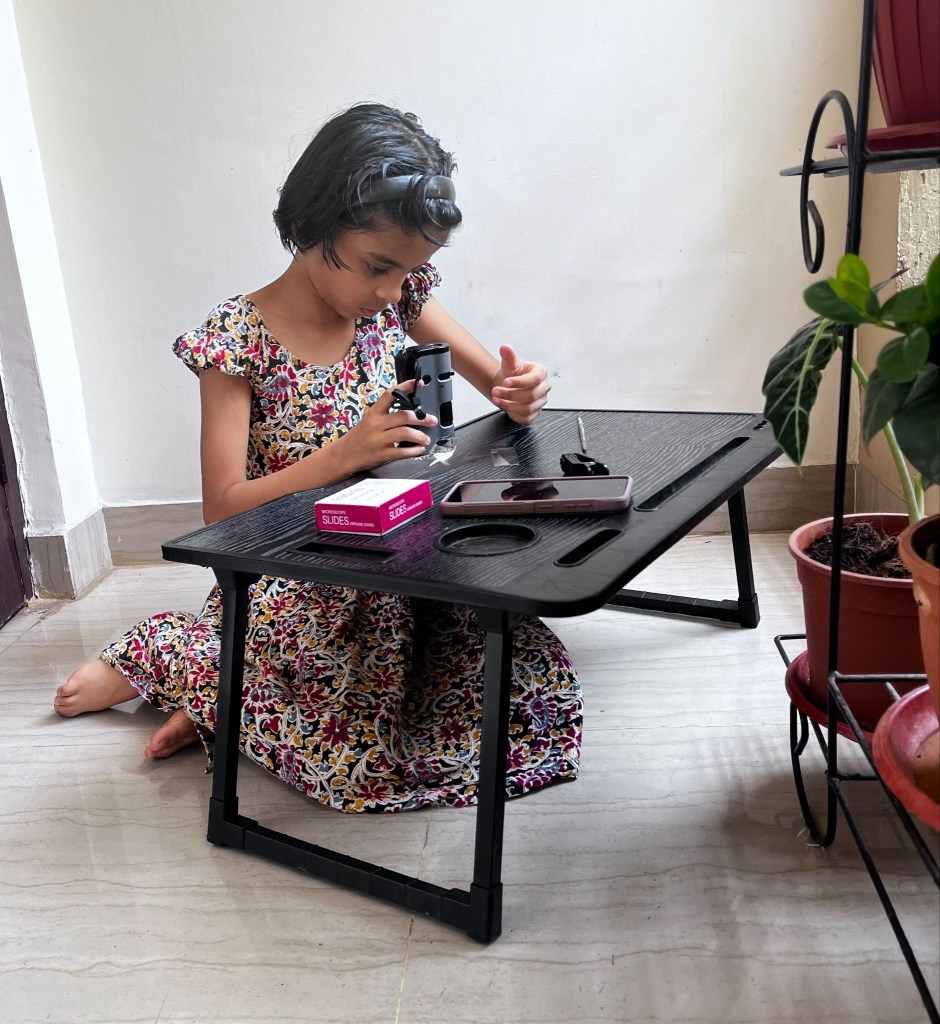
One day, my father gave me a surprise. He showed me a small device and told me that we could see many different organisms that are invisible to our naked eyes. It was a very small device that I could hold in my palm. He told me that he had purchased it from Amazon. The device was called the Carson MicroFlip 100x-250x LED Lighted Pocket Microscope.

I am Discovering an Invisible World

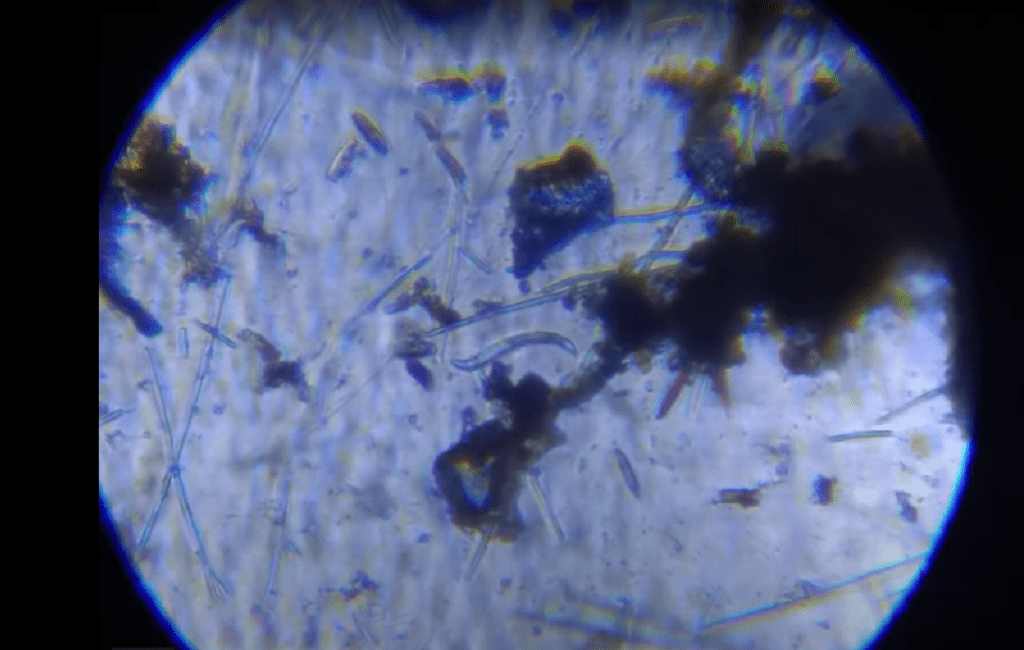
My father went to the balcony and collected a pinhead-sized amount of soil from a flower pot and added it to a drop of water. He mixed it gently with a brush and then took a small stroke of the mixture onto a cover slip. He inverted the cover slip onto a glass slide and placed it under the microscope. He turned on the microscope and connected his smartphone to it. Now we could see the magnified image directly on the phone screen. We could even take pictures and record videos using the phone. I was amazed to see different kinds of organisms moving here and there in that tiny drop of water—organisms that we could never see with our naked eyes. Some were sliding, while others were gliding. We called our mother, and she also looked at them. She said, “That is why we should never touch dirty water.”

The Hidden Microorganisms in Garden Soil

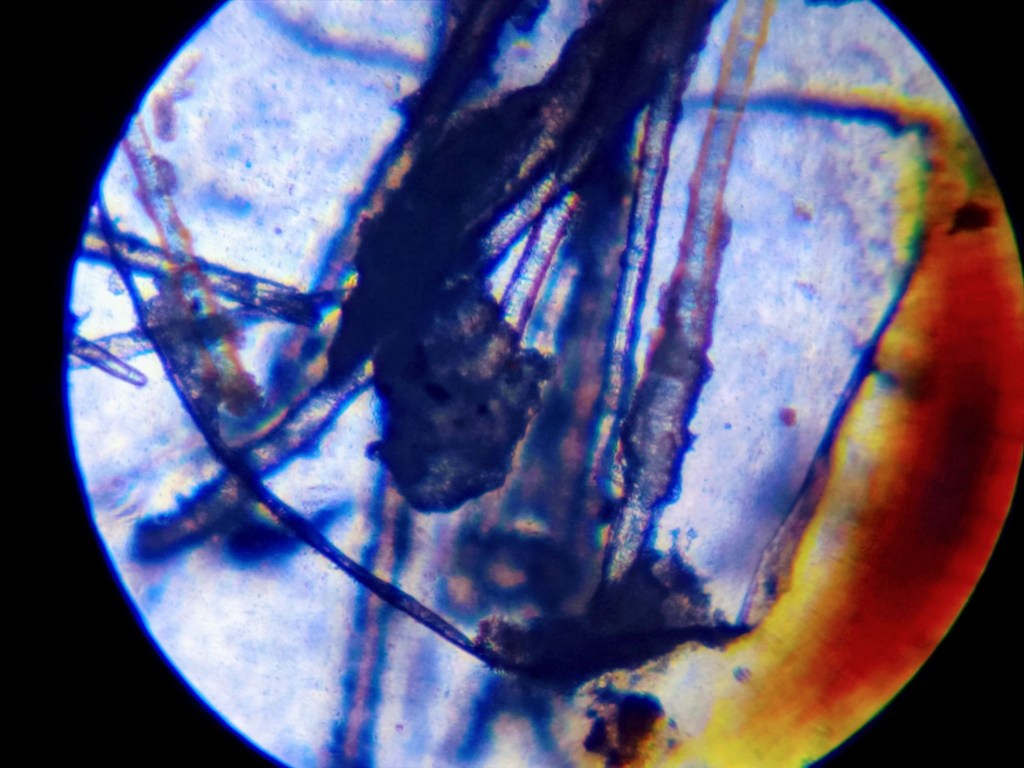
Then my father pulled a few hairs from his head and placed them on a glass slide under the microscope. We were very curious to see how hair looked under magnification. Under the microscope, the hairs looked like huge pipes, and the base of the hair, called the hair follicle, looked like the base of a coconut tree. Overall, it felt as if I was looking at bamboo trees growing out from a bush.

A Closer Look at Hair and Hair Follicles

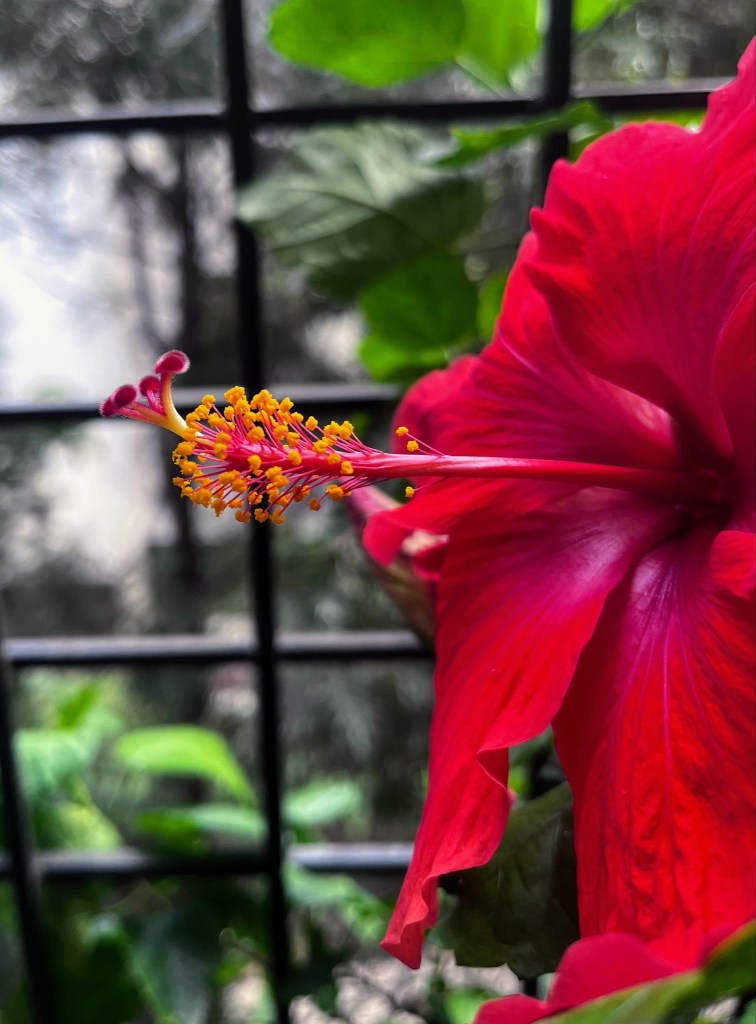
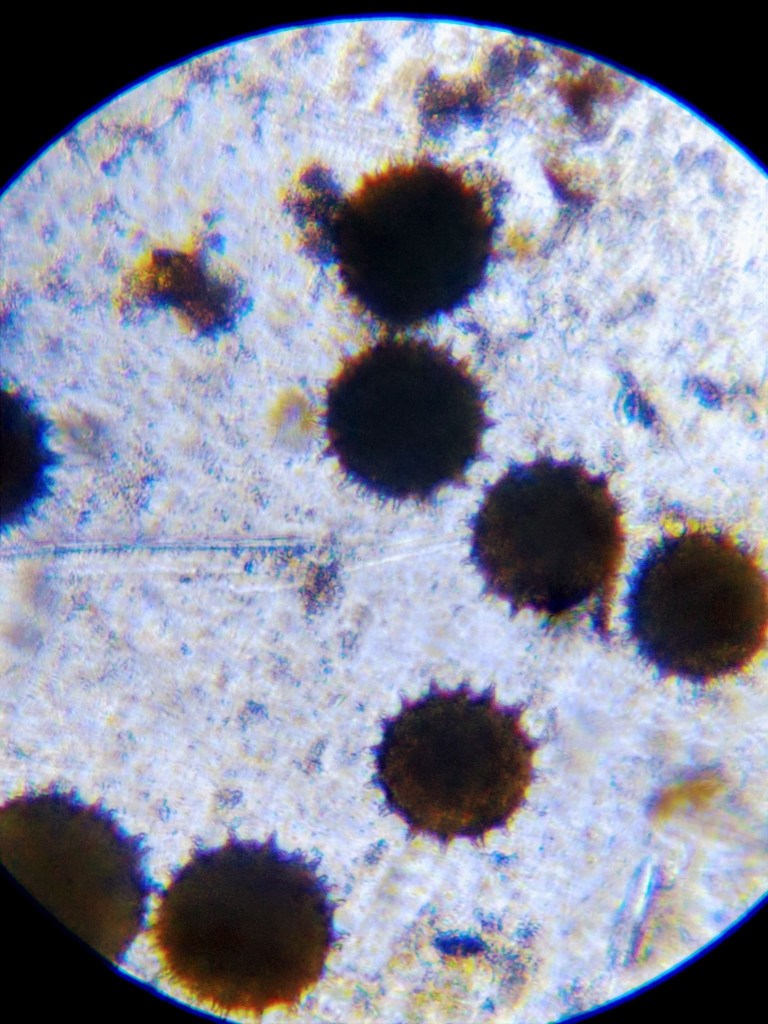
Next, my father brought a hibiscus flower and wanted to show me how pollen grains looked under the microscope. He gently dusted the pollen grains—the tiny yellow grain-like structures at the tip of the flower—onto the glass slide using a brush. OMG! What I saw under the microscope looked like deadly viruses shown in toothpaste advertisements. My father explained that pollen grains have many different structures and that they vary from plant to plant. He said that the spike-like structures on this pollen help it attach to the stigma, which helps in pollination.

Tiny Yellow Pollens of Hibiscus
Pollen Under the Microscope

I really enjoyed exploring a completely different world through the microscope. There are so many organisms around us that we cannot see with our eyes. Many things that look very simple to us are actually far more complex and beautiful when viewed under a microscope. It made me realize that there is an entire hidden world all around us waiting to be discovered.

A special trip to my Grandfather’s agricultural land in Indravati

I went to Indravati during my Dussehra vacation this year. This is the place where my father spent his childhood. We went there to explore this beautiful place together. My father took us to a small piece of land that my grandfather had purchased beside the Indravati River many decades ago. My father often tells me how he spent a lot of time there enjoying nature and helping with the agricultural work during weekends and holidays.

The nearest town to Indravati is Nowrangpur. We reached Nowrangpur in the evening on 26th September. The next morning, on 27th September, we started our journey to Indravati at 9:00 AM. On the way, we stopped for breakfast at a roadside stall around 9:30 AM. It was very crowded, so I ate my breakfast inside the car. Even though it was a small roadside stall, the food was really delicious! My father said, “Whenever you see a crowd at a food stall, it means the food there is good.”

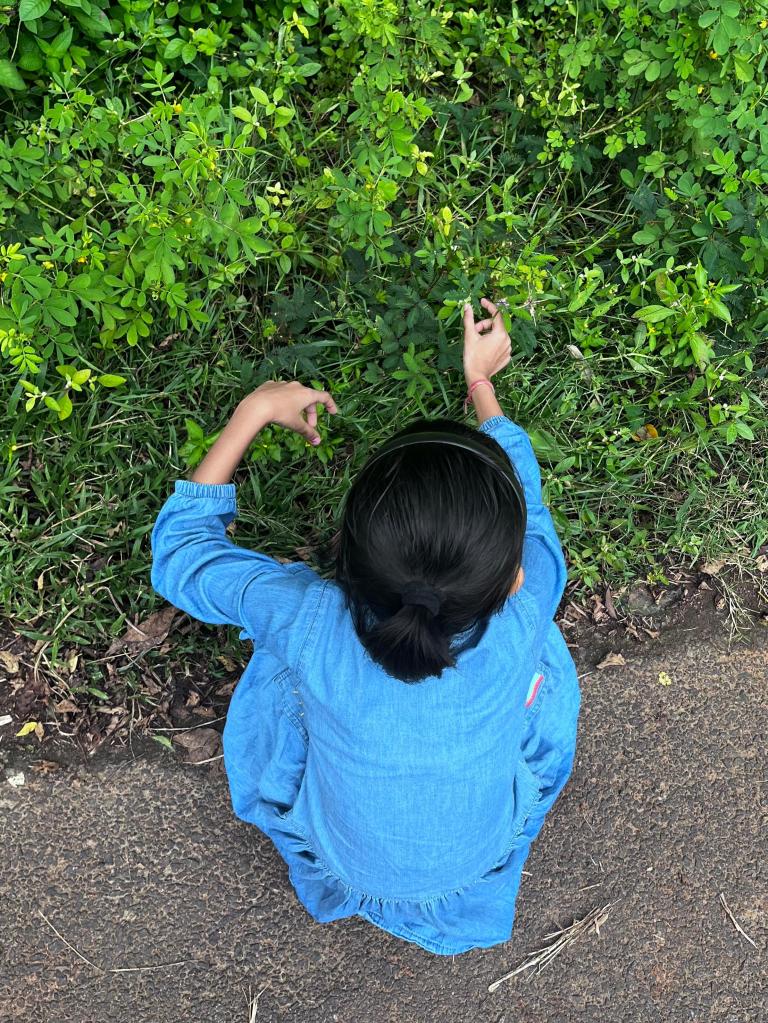
We reached my grandfather’s land by 10:30 AM. As soon as I got down from the car, my father pointed to a small creeper and said, “If you touch this plant, it will fold its leaves inward and droop. In Odia, it is called Lajakuli lata.” I smiled and told my father, “This is the Touch-Me-Not plant! I studied about it in my GK class last year.” The creeper was growing all along the roadside, and I really enjoyed playing with it.

Bhoomi playing with ‘Touch me not’ plant

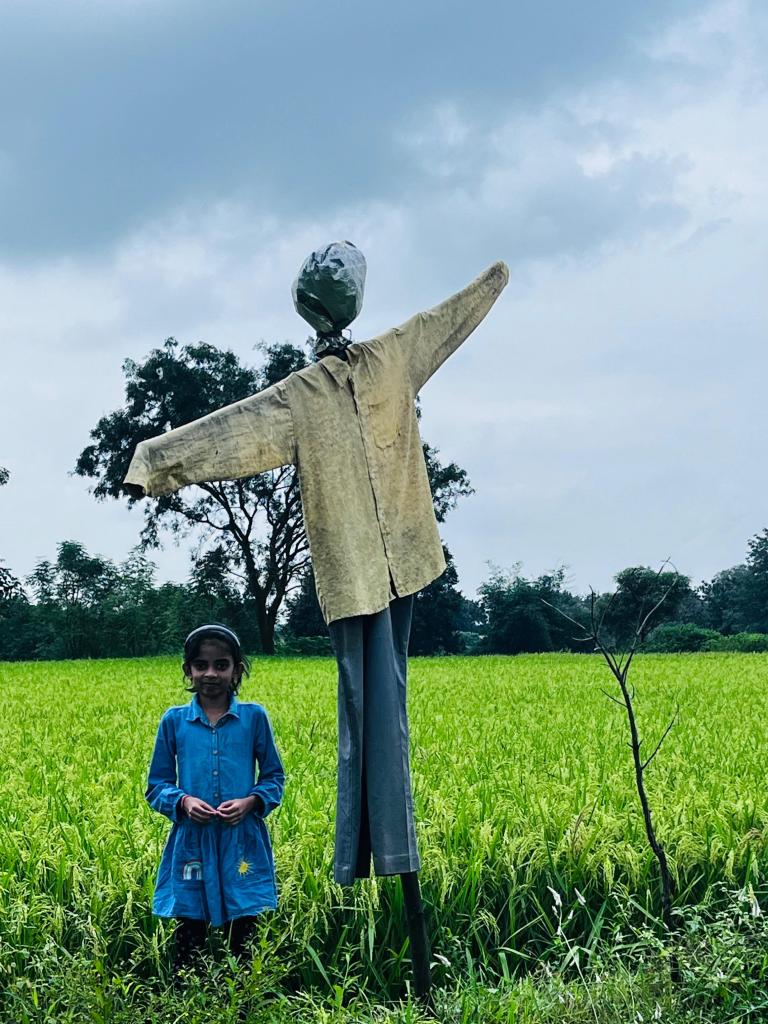
When I entered the farm, I saw greenery everywhere. In the middle of the rice field, I noticed a scarecrow, and I was very excited to take a photo with it. Siva uncle (the tenant farmer) told my father that he made it using his old torn clothes. He also said that when the wind blows, the scarecrow waves its hands. I thought that must look very scary! It can easily scare children like me.

Bhoomi with the Scarecrow

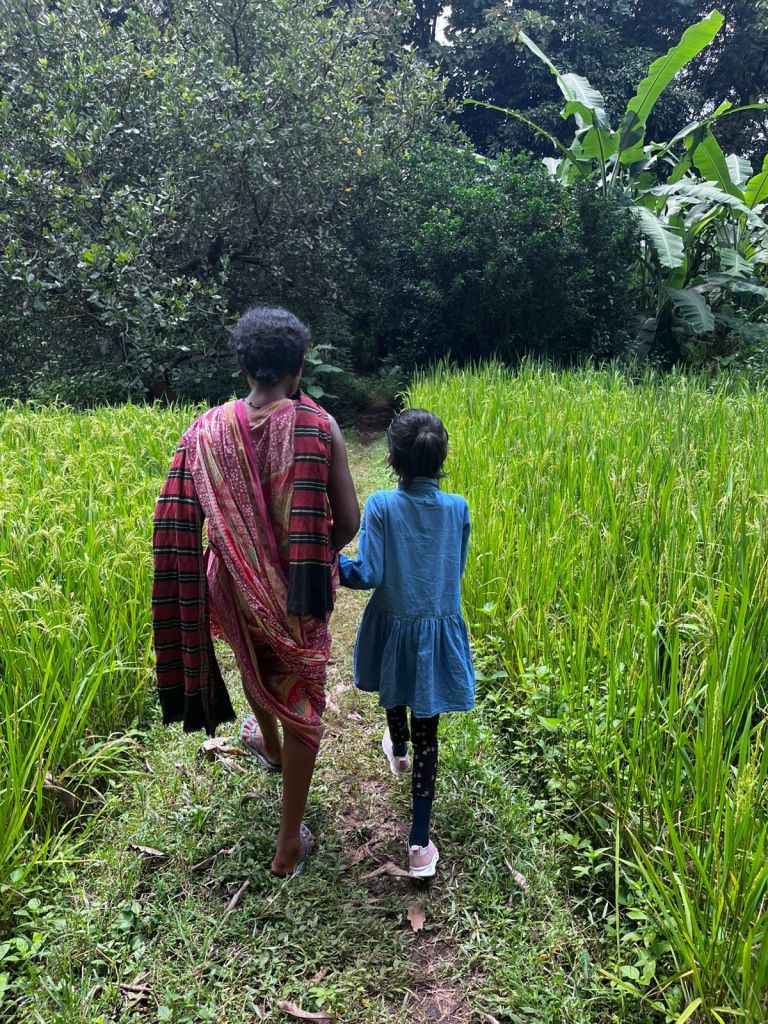
The Siva uncle’s wife took me around the farm and showed me different plants. I saw mango trees, banana trees, lychee plants, turmeric plants, jackfruit trees, bamboo, teak, and cashew trees. My father told me, “These big trees were planted by my father. It is his hard work that we are enjoying the fruits today.”

Siba’s wife showing Bhoomi different plants

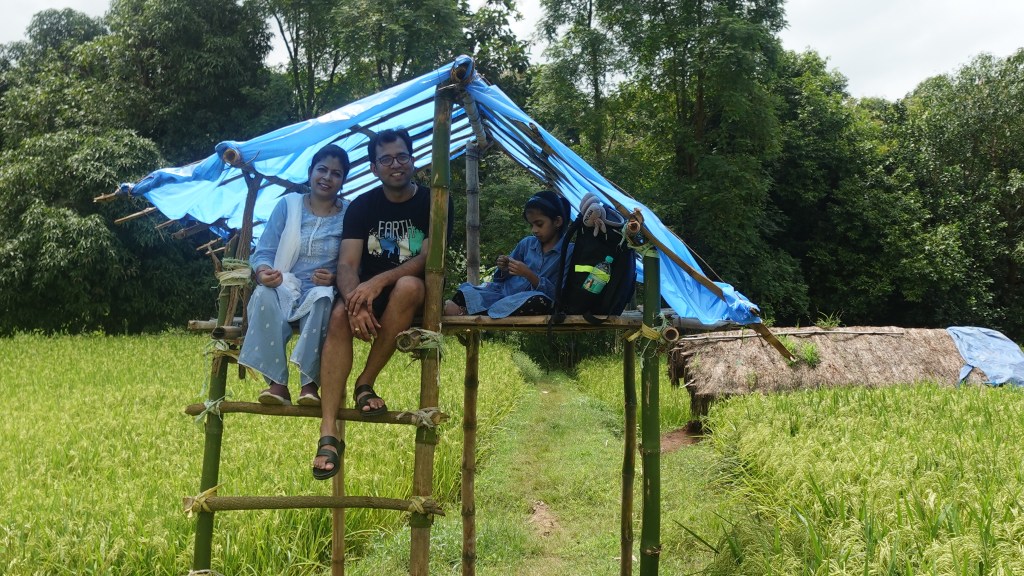
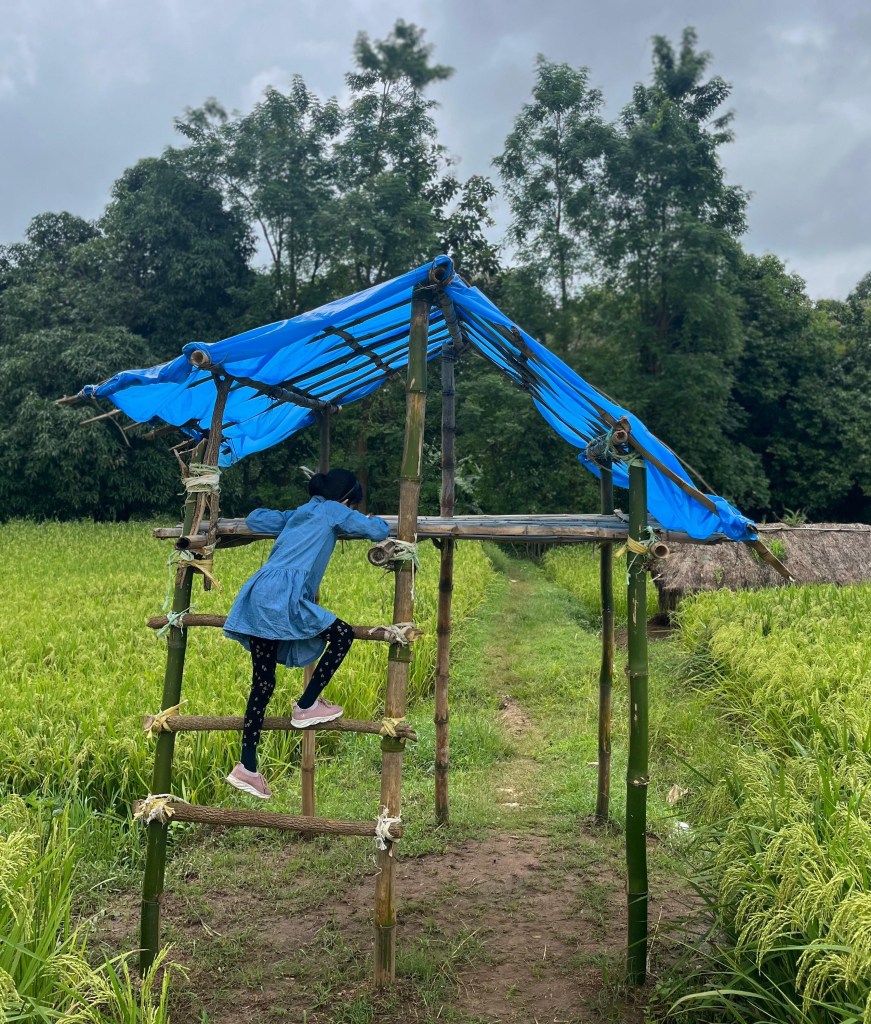
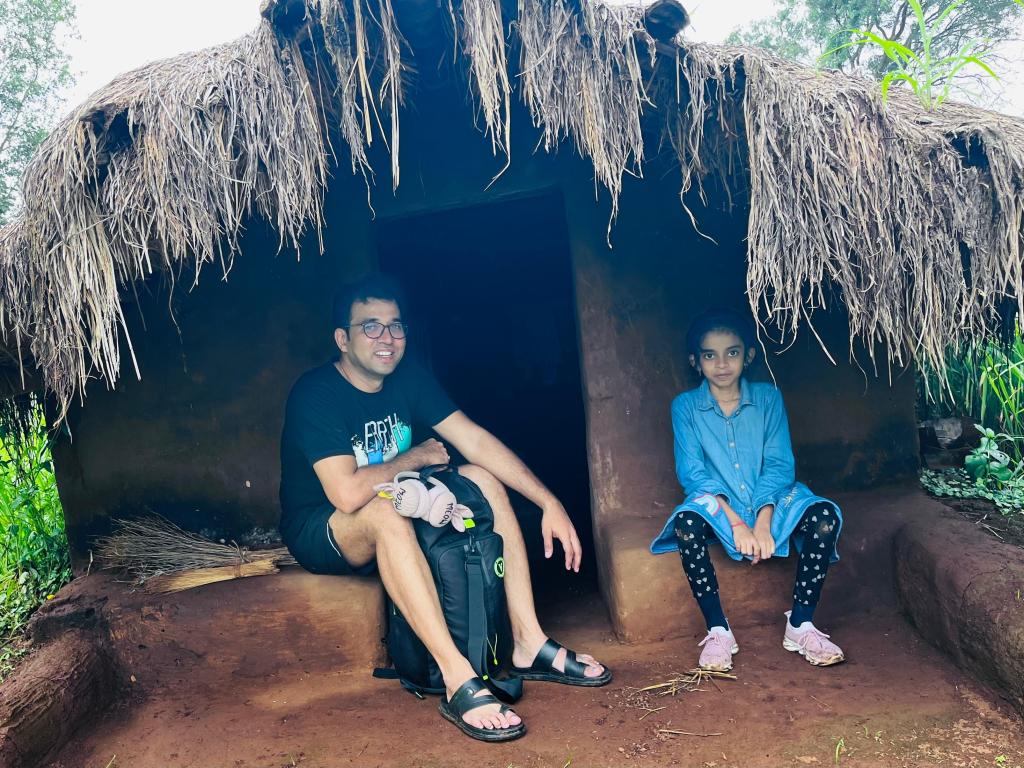
Then Siva uncle showed me the Mancha — a bamboo hut raised above the ground. It is used as a temporary shed for resting. My father said that sitting on the Mancha and gazing at the lush green rice fields was one of his favorite pastimes when he was a child. We all sat there for a while, enjoying the view and the gentle breeze.

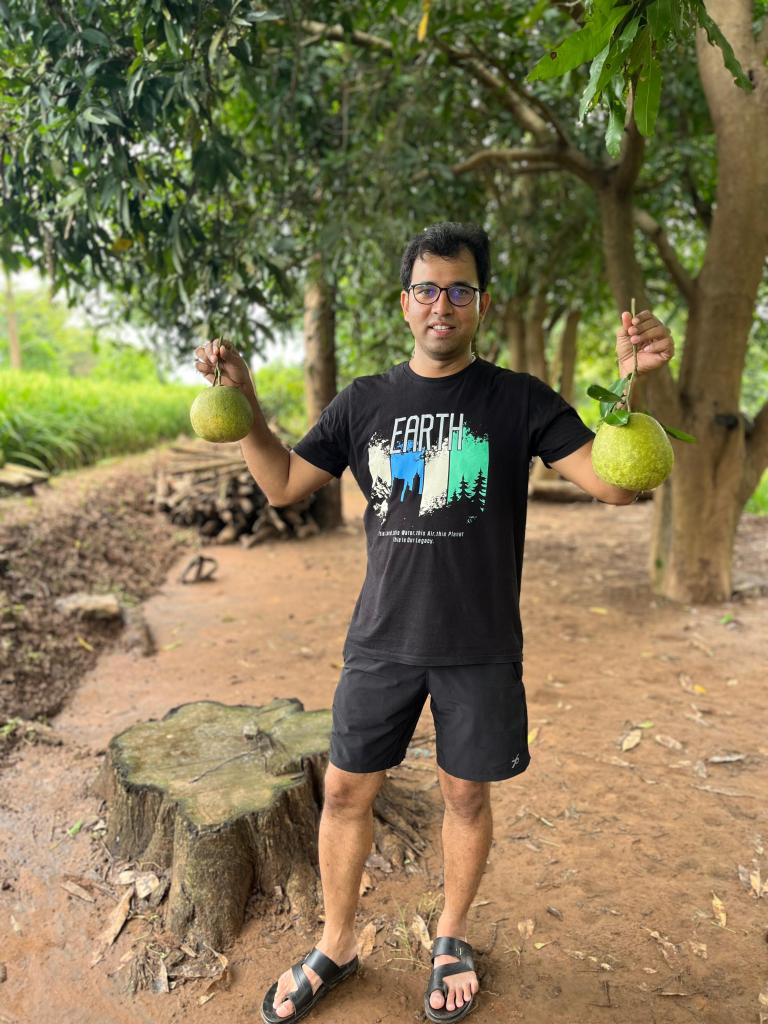
Next, my father took me to a kaccha house near the Mancha. It was made of mud and polished with cow dung. Many small agricultural tools were stored inside. My father and Siva uncle plucked some pomelo fruits for us, and my father also harvested a whole bunch of bananas from the field.

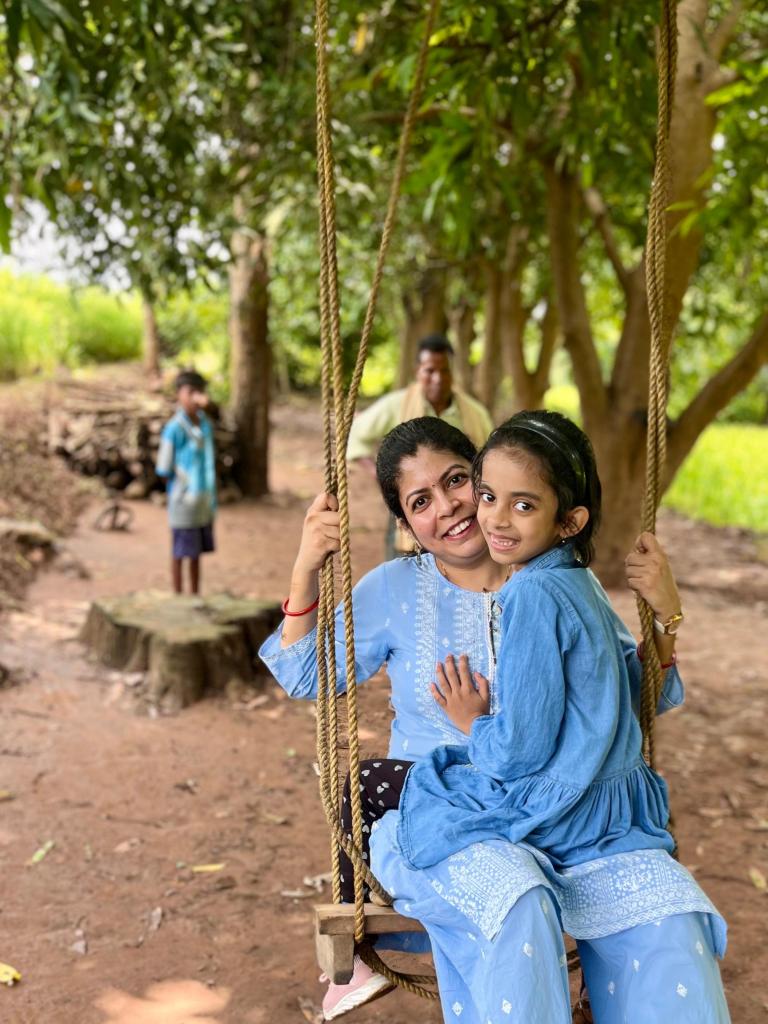
Then came a big surprise! Siva uncle had brought a swing for me. He tied it to one of the branches of the mango tree. Soon, my mother and I began swinging together. We went up and down, laughing and enjoying every moment of the ride.

Bhoomi enjoying the swing with mother

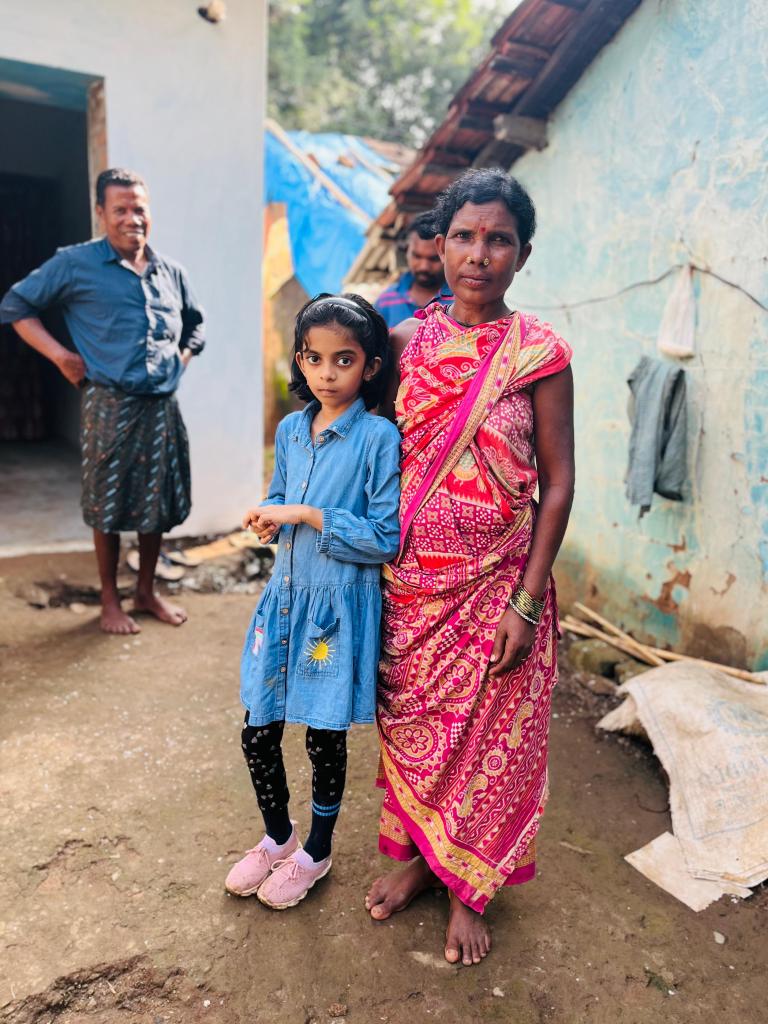
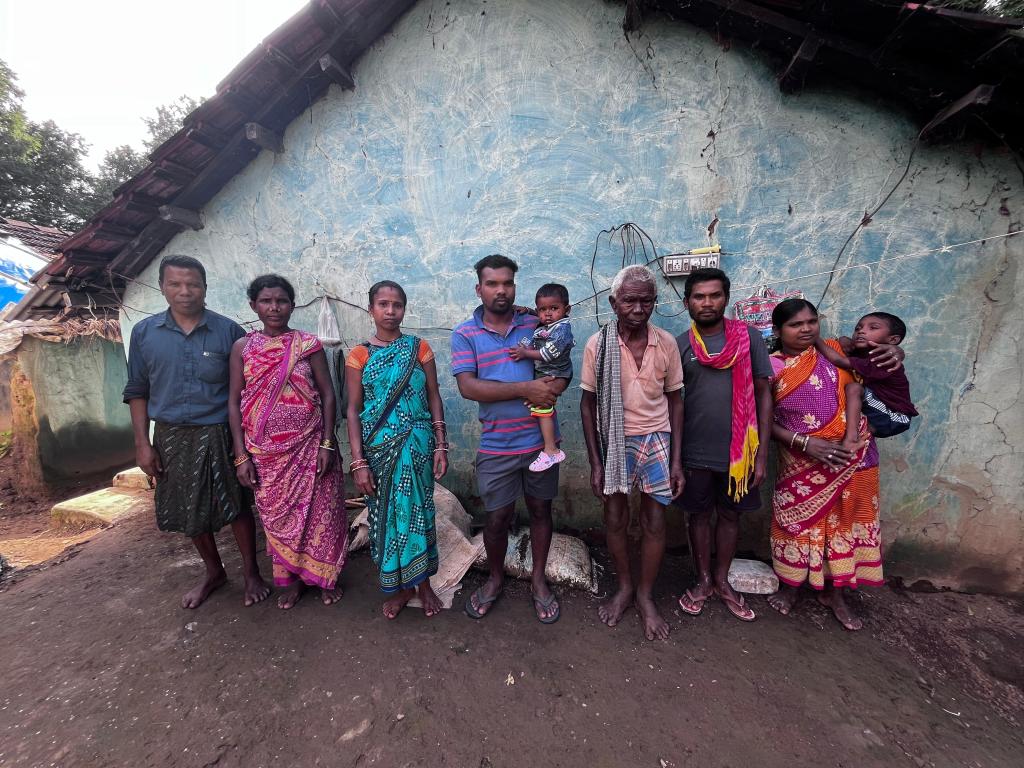
After some time, Siva uncle invited us to his home, which was on the other side of the river. As the water level was low, my father carried me on his shoulders, and we crossed the river to reach his village, Kastiguda. Siva uncle’s home was a small kaccha house, but it was very beautiful inside. He lives in a joint family with his father, two sons, two daughters-in-law, and two grandchildren. Since it was festival time, we gave them new clothes, sweets, chocolates, and toys for the kids. They, in return, offered us some fruits and local sweets.

Bhoomi with Siva uncle’s wife

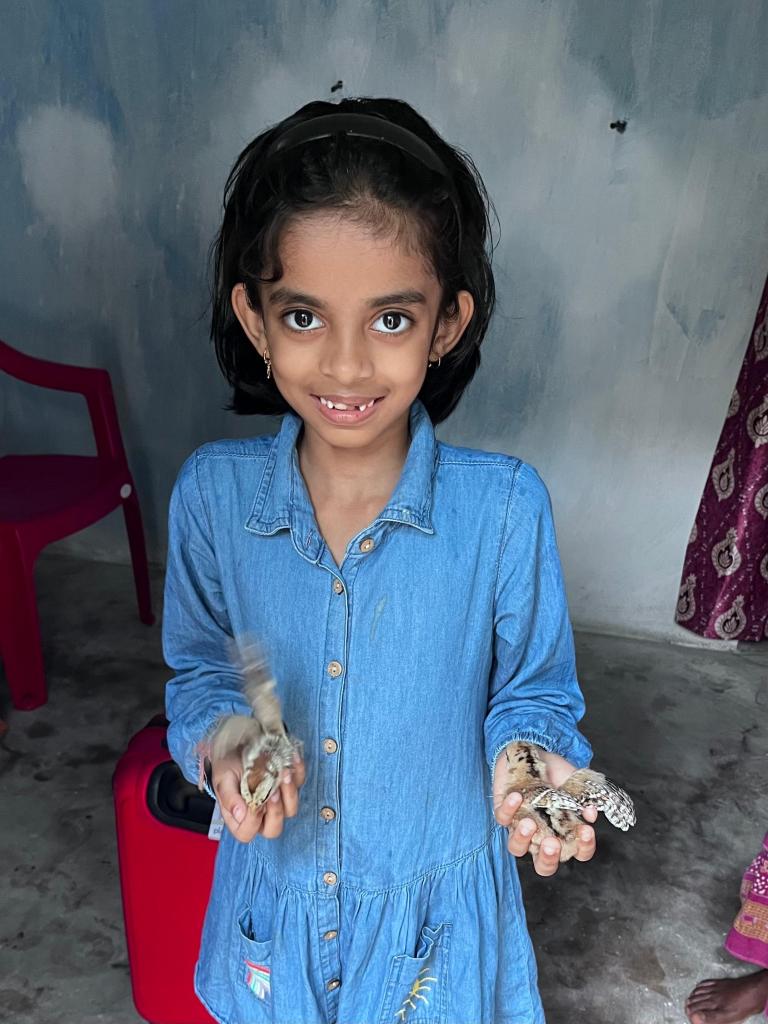
In the backyard, I saw a mother hen with her tiny chicks grazing together. I asked my father to get the chicks for me. My father and Siba uncle’s son helped catch them, and soon I was holding them in my hands. I played with them happily, but they started chirping loudly, calling for their mother. The hen was watching me from a distance. When I went near to return the chicks, the mother hen suddenly jumped and pecked my leg with her beak! I got scared, but everyone laughed. My father smiled and said, “This is normal for any mother. They are always very protective of their children.”

Bhoomi holding the chicks

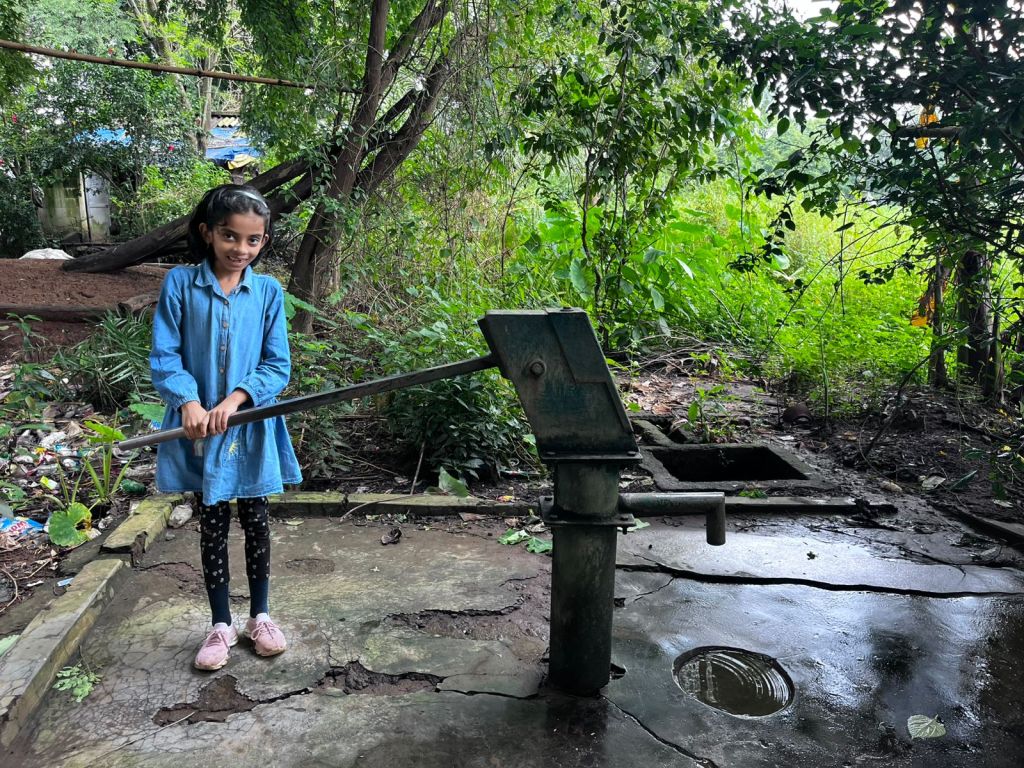
Later, my father showed me a hand pump in front of Siva uncle’s house. I had never seen one before because we live in a big city. He showed me how to pump water. It was a bit hard for me, but I still managed to get some water out. It was such great fun!

What I Learned

This trip to Indravati was one of the most special journeys of my life. I learned how beautiful and peaceful village life can be. I saw how farmers work hard to grow food and take care of nature. I also understood how much love and care people in villages share with each other.

It made me feel proud of my father and grandfather, and grateful for the beautiful memories they have given me. I will always remember this trip and hope to visit Indravati again soon!