The Day We Climbed Deomali Hills:

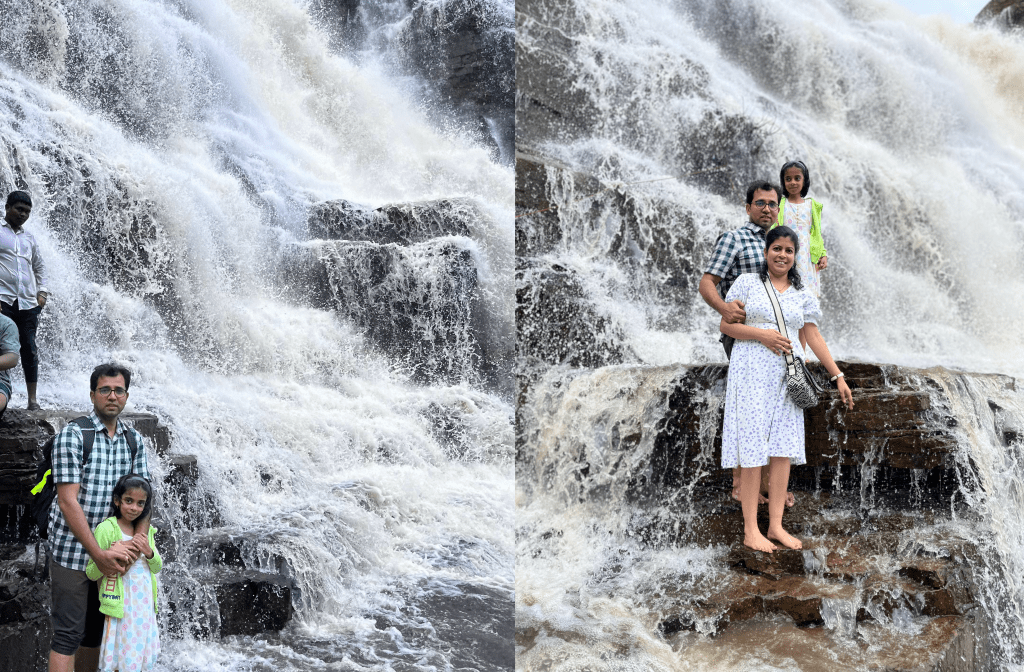
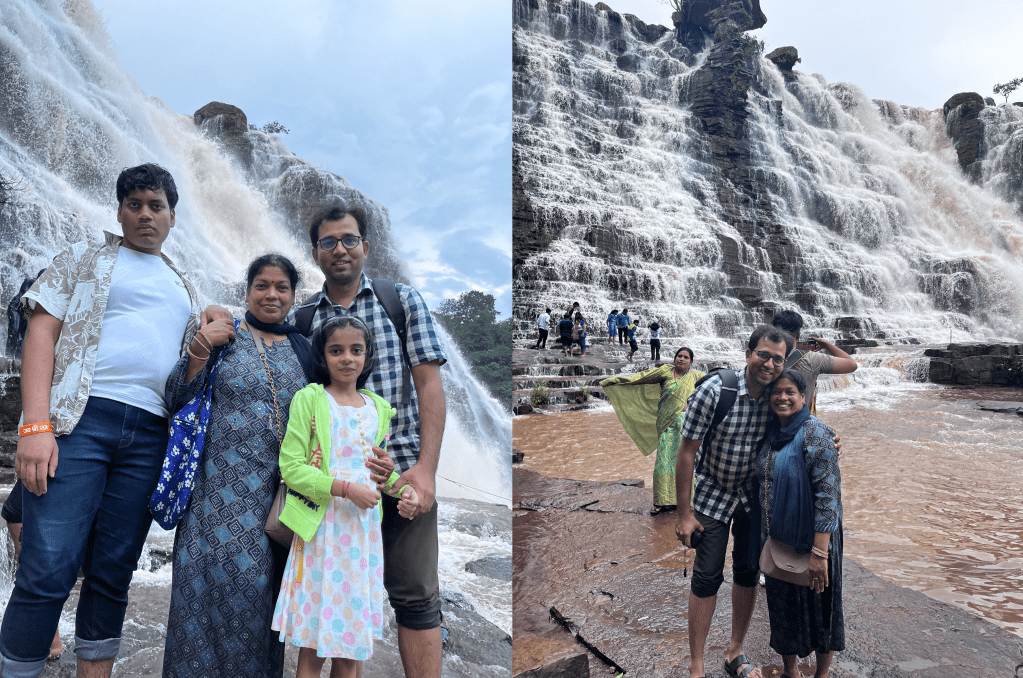
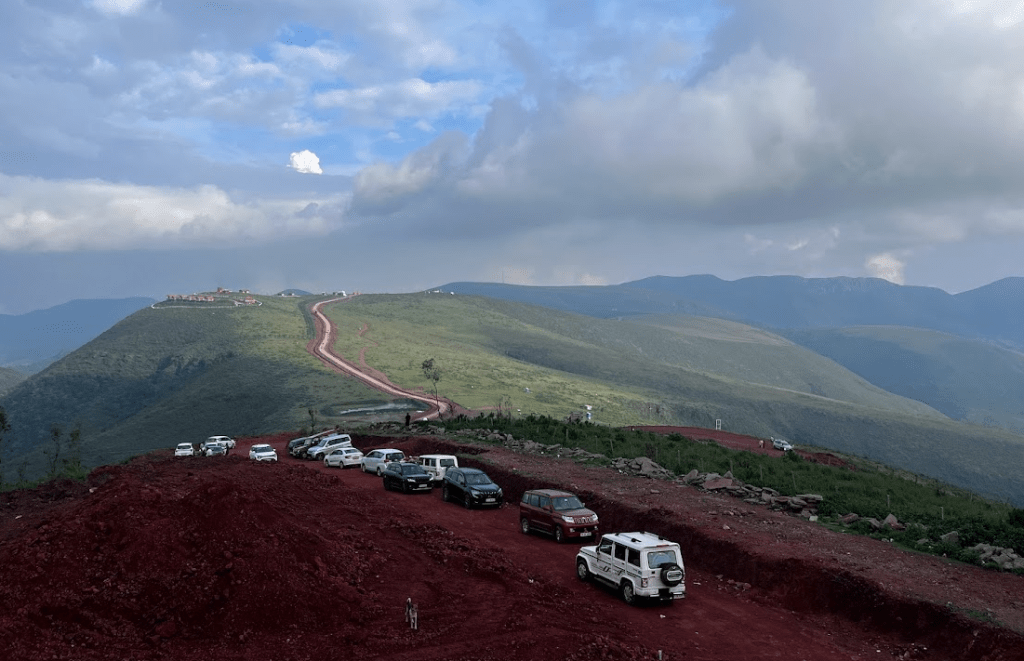
We visited Deomali, the highest mountain in Odisha, during my Dussehra vacation last year. After a long drive from Nabarangpur, we reached the Deomali hills at around 3 PM. The roads were very narrow, and we travelled through winding serpentine hill roads to reach there.

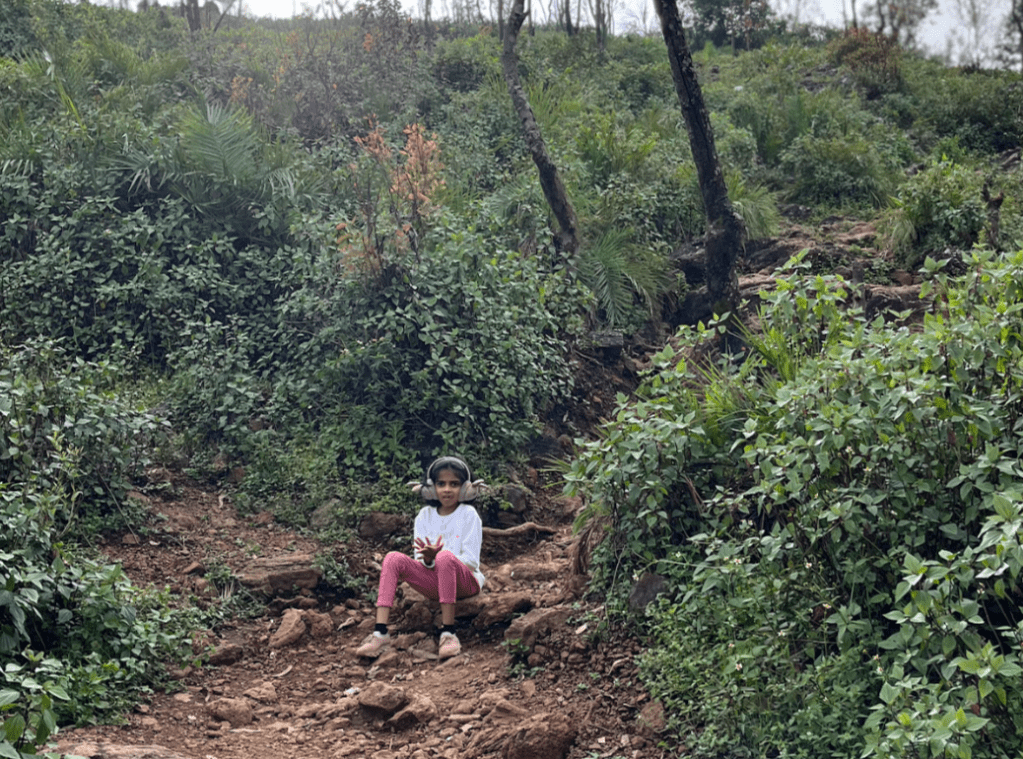
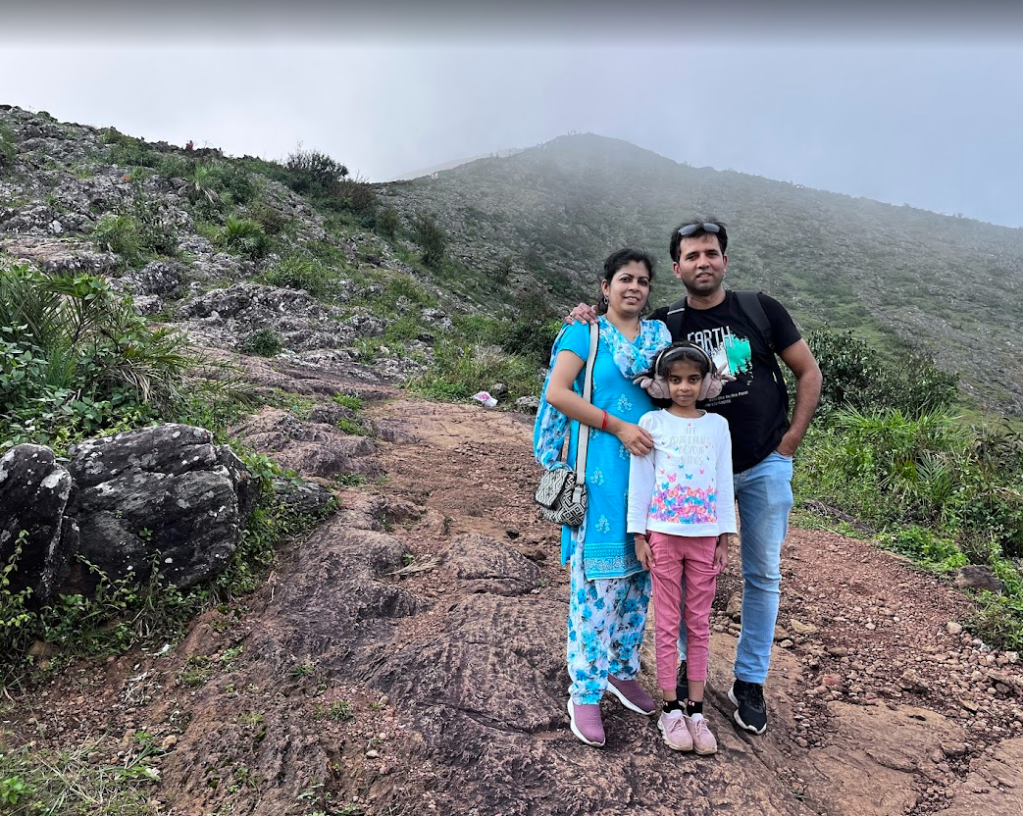
Even though it was a sunny day, it became quite cold when we reached the base of the mountain. I quickly put on my earmuffs because we were going to climb the mountain. We saw many tourists coming down from the top. They all looked very tired, but at the same time very happy.My father packed a few water bottles into his backpack and said, “Let’s start immediately, otherwise it will get late.” My mother looked at the mountain with some fear and astonishment. Maybe she was not feeling very confident about the trek. But I pulled my mother along and encouraged her for this exciting mountain adventure.

My father was shocked to see how eagerly I was climbing the mountain. I was much faster than my parents. My father had injured his leg one year earlier, but he was still very determined to climb the mountain.

We met many visitors on the way. Some people were climbing up while others were coming down. Many were taking pictures, some were enjoying snacks, and some were sitting and talking while taking a break.

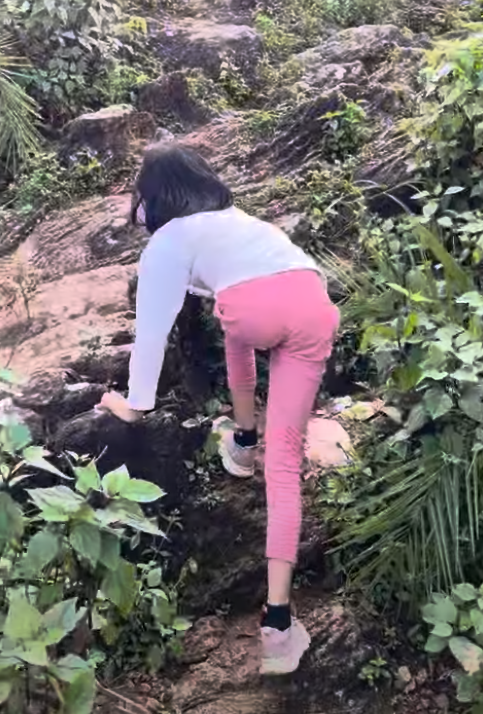
The mountain had many uneven rocks and stones, so it was not easy to climb straight up. Sometimes we had to change our path to make the climb easier, but we also had to make sure we were not going the wrong way. At times, I walked so fast that my parents became far behind me, and I could not see anyone ahead of me. So I had to slow down or go back to join them.

We came across many huge rocks, and some of the small stones rolled down whenever we stepped on them. So we had to be very careful to avoid accidents. I could imagine how dangerous it would become during the rainy season. It might even become impossible to climb.

Sometimes I felt scared when I looked down and realized how high we had climbed.

When we reached the middle of the mountain, my mother became very tired and frightened. Her legs were hurting badly, and she slowly lost confidence about reaching the top. She said, “I cannot walk anymore.” By that time, we had already completed almost 80% of the climb. We could see a red flag at the top of the mountain, and people reaching there were shouting loudly with excitement.

My father and I were also very excited to reach the top. But after seeing my mother’s condition, we decided to stop and take some rest. My father gently massaged her legs, but she was still in pain.My mother told both of us to continue climbing while she waited there. But we did not feel safe leaving her alone. So after resting for some time, we finally decided to return down the mountain together.

Climbing down was also not easy because the tiny pebbles and stones rolled down whenever we stepped on them. My father held my hand because I was moving too fast. He warned me that I might lose control and fall if I did not slow down.

While climbing up, we were slow. But while climbing down, we were much faster — maybe because of Earth’s gravity!

Finally, we safely reached the base of the mountain, where our cab driver was waiting for us. The driver asked whether we had reached the top. My father jokingly replied, “We were the only people who reached the top!” We all laughed loudly.

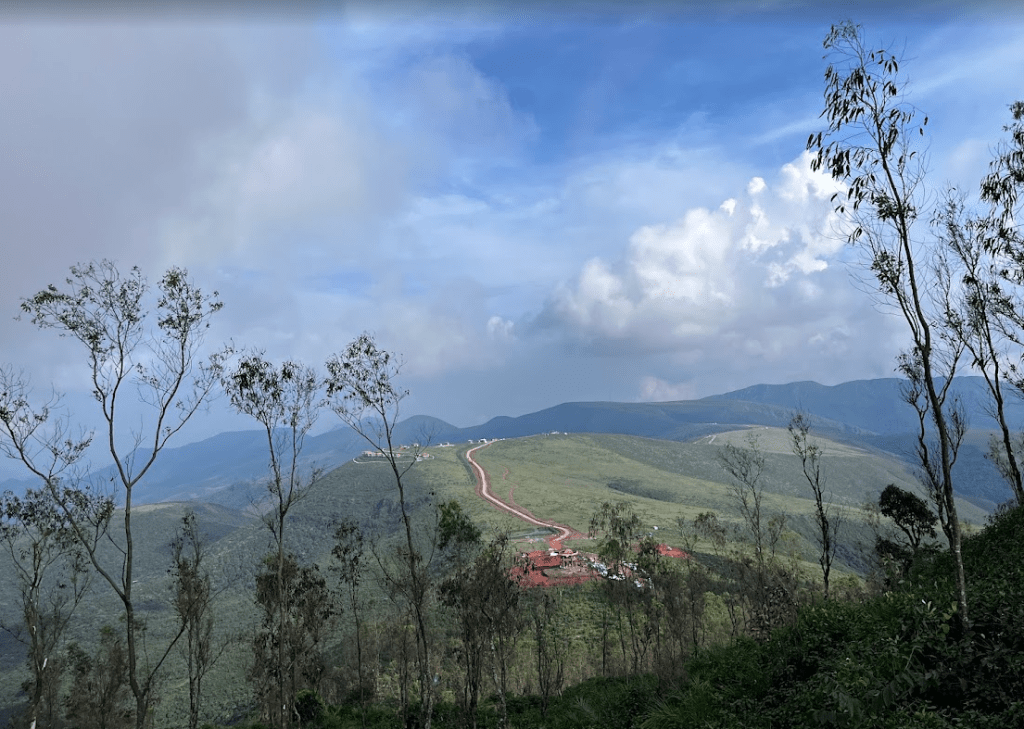
Even though we could not actually reach the top, we still enjoyed the trek very much. We loved the greenery, the magnificent hills, the floating clouds, and the beautiful blue sky. Visiting Deomali became an unforgettable memory for our family. If I ever get another chance, I will surely visit again — and next time, I will definitely reach the top of the mountain.

Secrets Under the Microscope

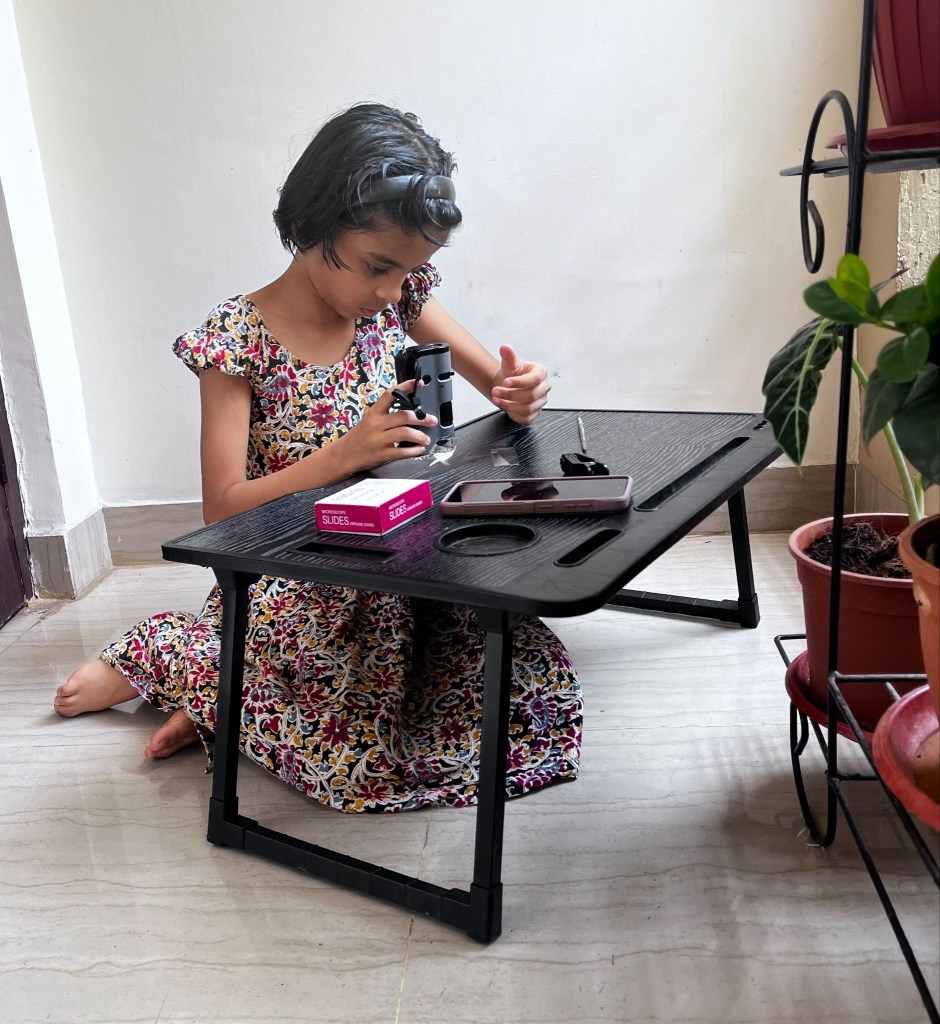
One day, my father gave me a surprise. He showed me a small device and told me that we could see many different organisms that are invisible to our naked eyes. It was a very small device that I could hold in my palm. He told me that he had purchased it from Amazon. The device was called the Carson MicroFlip 100x-250x LED Lighted Pocket Microscope.

I am Discovering an Invisible World

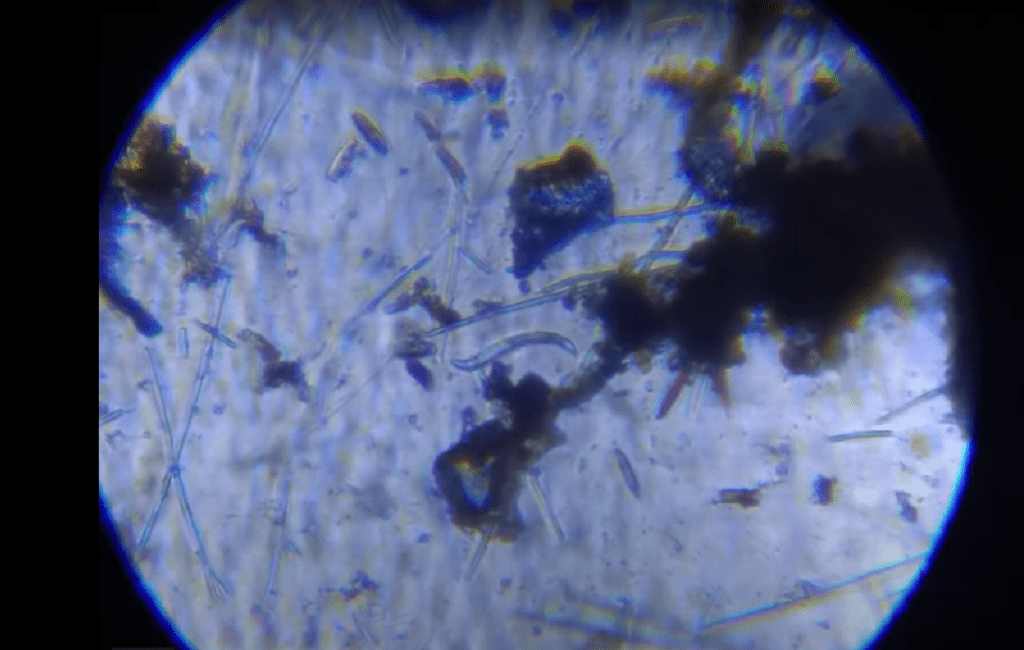
My father went to the balcony and collected a pinhead-sized amount of soil from a flower pot and added it to a drop of water. He mixed it gently with a brush and then took a small stroke of the mixture onto a cover slip. He inverted the cover slip onto a glass slide and placed it under the microscope. He turned on the microscope and connected his smartphone to it. Now we could see the magnified image directly on the phone screen. We could even take pictures and record videos using the phone. I was amazed to see different kinds of organisms moving here and there in that tiny drop of water—organisms that we could never see with our naked eyes. Some were sliding, while others were gliding. We called our mother, and she also looked at them. She said, “That is why we should never touch dirty water.”

The Hidden Microorganisms in Garden Soil

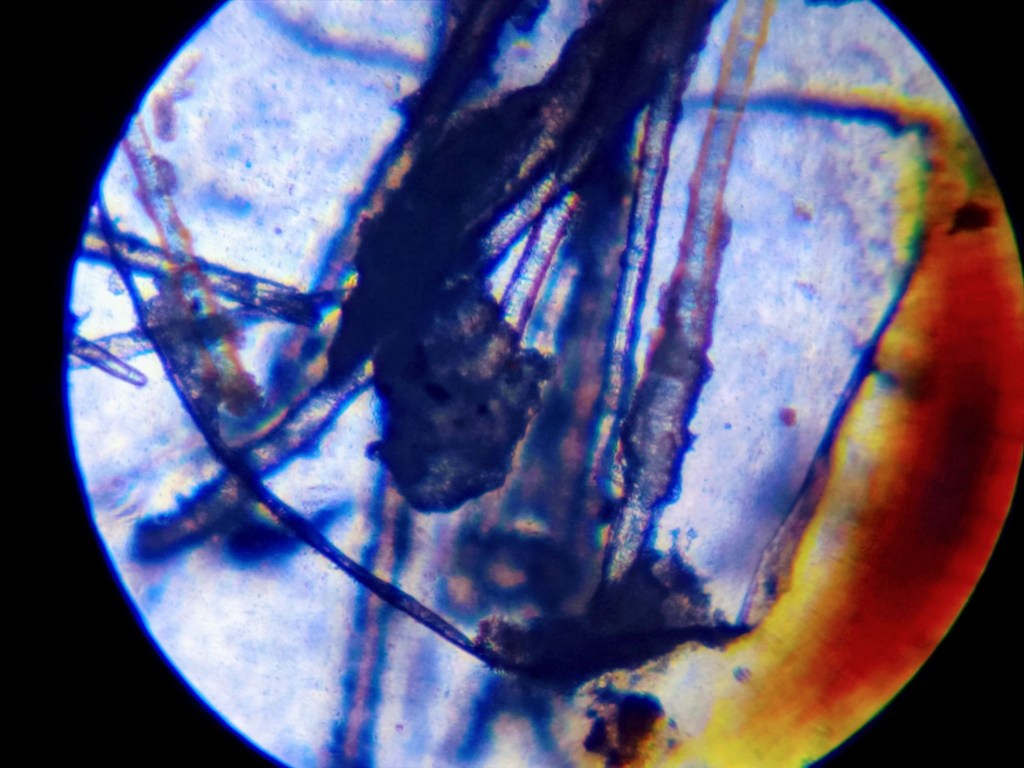
Then my father pulled a few hairs from his head and placed them on a glass slide under the microscope. We were very curious to see how hair looked under magnification. Under the microscope, the hairs looked like huge pipes, and the base of the hair, called the hair follicle, looked like the base of a coconut tree. Overall, it felt as if I was looking at bamboo trees growing out from a bush.

A Closer Look at Hair and Hair Follicles

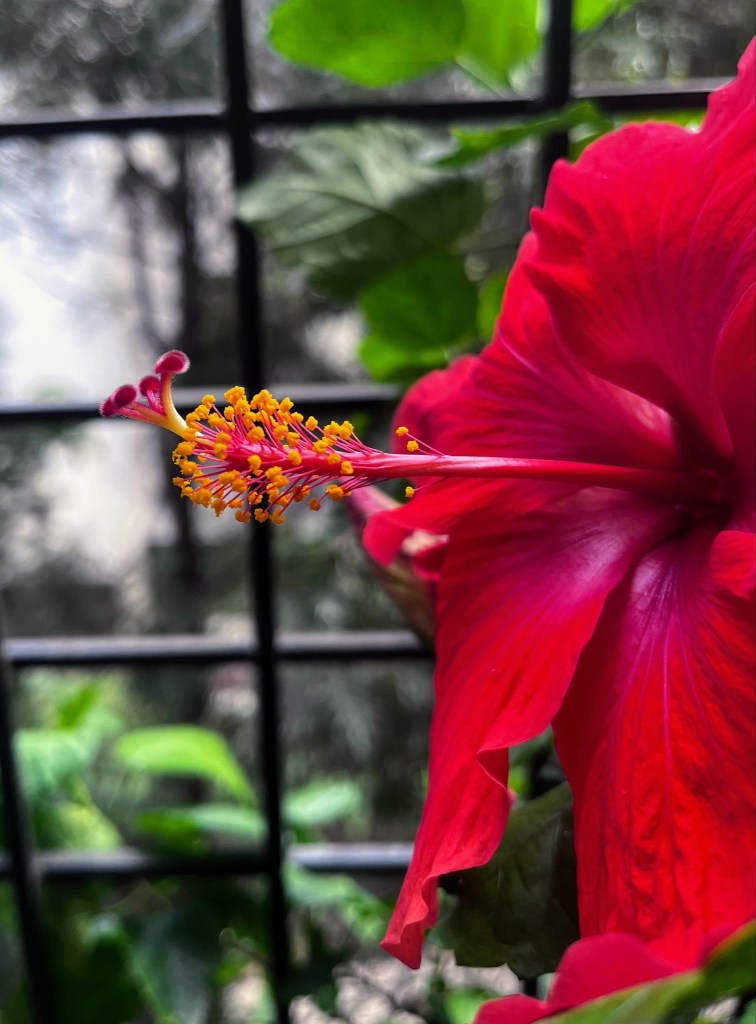
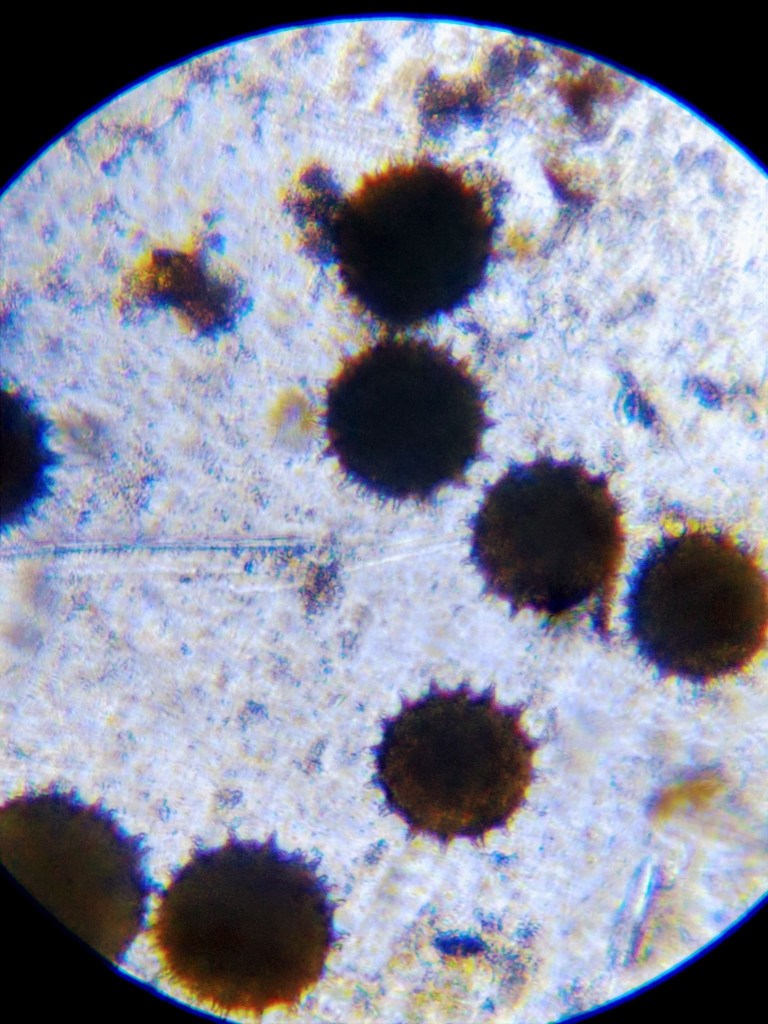
Next, my father brought a hibiscus flower and wanted to show me how pollen grains looked under the microscope. He gently dusted the pollen grains—the tiny yellow grain-like structures at the tip of the flower—onto the glass slide using a brush. OMG! What I saw under the microscope looked like deadly viruses shown in toothpaste advertisements. My father explained that pollen grains have many different structures and that they vary from plant to plant. He said that the spike-like structures on this pollen help it attach to the stigma, which helps in pollination.

Tiny Yellow Pollens of Hibiscus
Pollen Under the Microscope

I really enjoyed exploring a completely different world through the microscope. There are so many organisms around us that we cannot see with our eyes. Many things that look very simple to us are actually far more complex and beautiful when viewed under a microscope. It made me realize that there is an entire hidden world all around us waiting to be discovered.

A special trip to my Grandfather’s agricultural land in Indravati

I went to Indravati during my Dussehra vacation this year. This is the place where my father spent his childhood. We went there to explore this beautiful place together. My father took us to a small piece of land that my grandfather had purchased beside the Indravati River many decades ago. My father often tells me how he spent a lot of time there enjoying nature and helping with the agricultural work during weekends and holidays.

The nearest town to Indravati is Nowrangpur. We reached Nowrangpur in the evening on 26th September. The next morning, on 27th September, we started our journey to Indravati at 9:00 AM. On the way, we stopped for breakfast at a roadside stall around 9:30 AM. It was very crowded, so I ate my breakfast inside the car. Even though it was a small roadside stall, the food was really delicious! My father said, “Whenever you see a crowd at a food stall, it means the food there is good.”

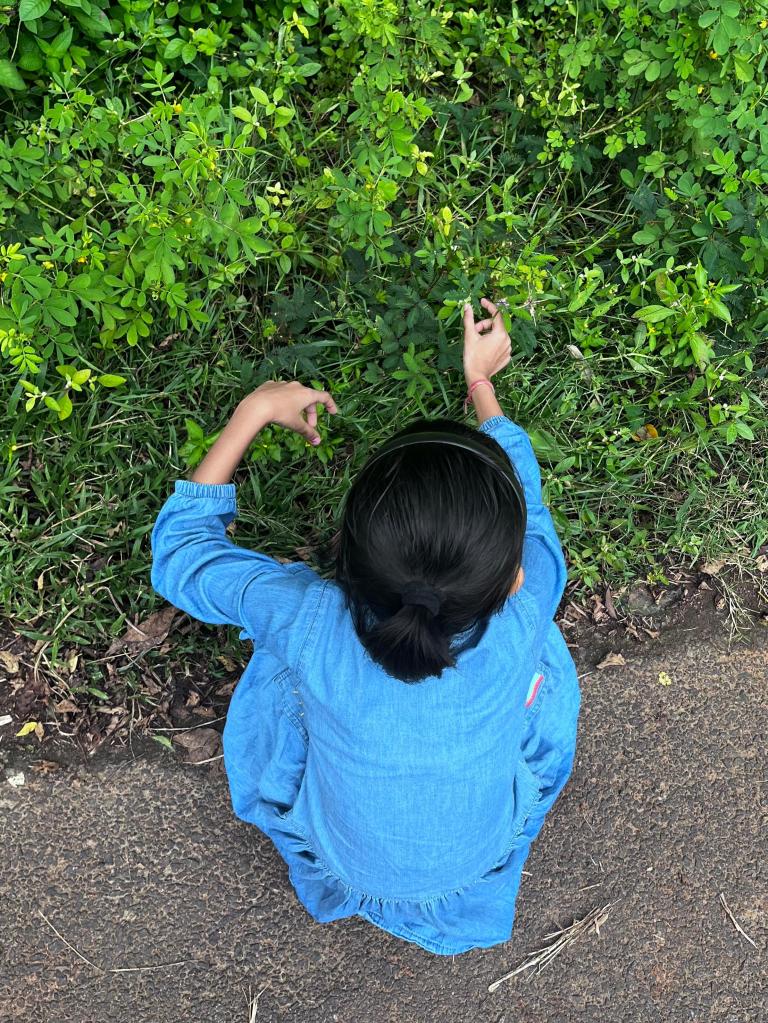
We reached my grandfather’s land by 10:30 AM. As soon as I got down from the car, my father pointed to a small creeper and said, “If you touch this plant, it will fold its leaves inward and droop. In Odia, it is called Lajakuli lata.” I smiled and told my father, “This is the Touch-Me-Not plant! I studied about it in my GK class last year.” The creeper was growing all along the roadside, and I really enjoyed playing with it.

Bhoomi playing with ‘Touch me not’ plant

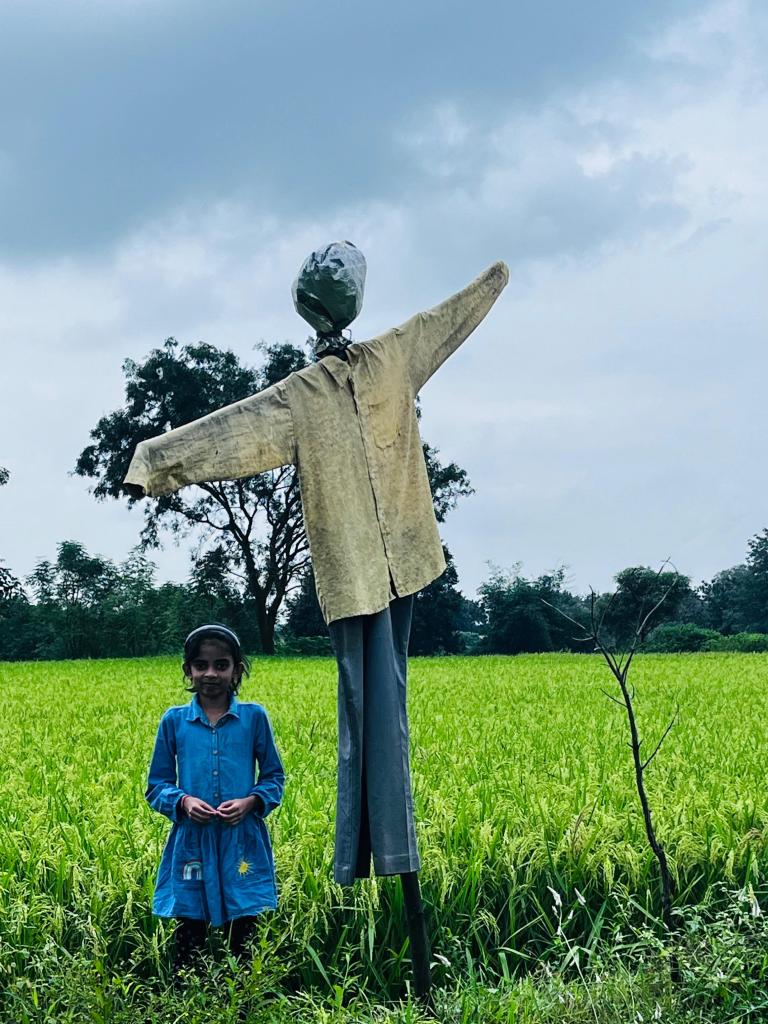
When I entered the farm, I saw greenery everywhere. In the middle of the rice field, I noticed a scarecrow, and I was very excited to take a photo with it. Siva uncle (the tenant farmer) told my father that he made it using his old torn clothes. He also said that when the wind blows, the scarecrow waves its hands. I thought that must look very scary! It can easily scare children like me.

Bhoomi with the Scarecrow

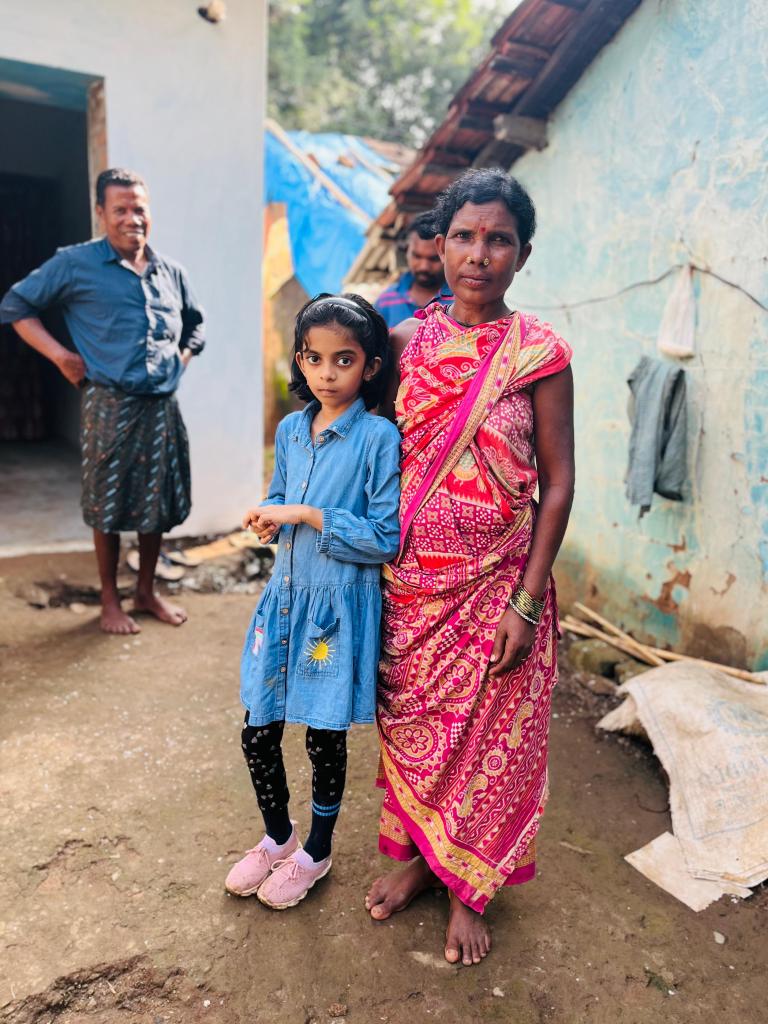
The Siva uncle’s wife took me around the farm and showed me different plants. I saw mango trees, banana trees, lychee plants, turmeric plants, jackfruit trees, bamboo, teak, and cashew trees. My father told me, “These big trees were planted by my father. It is his hard work that we are enjoying the fruits today.”

Siba’s wife showing Bhoomi different plants

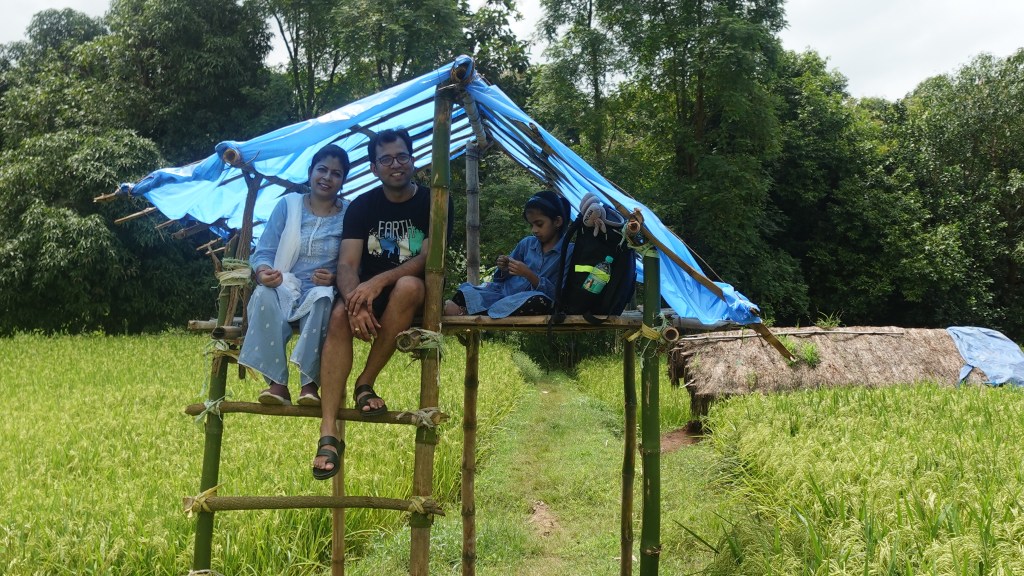
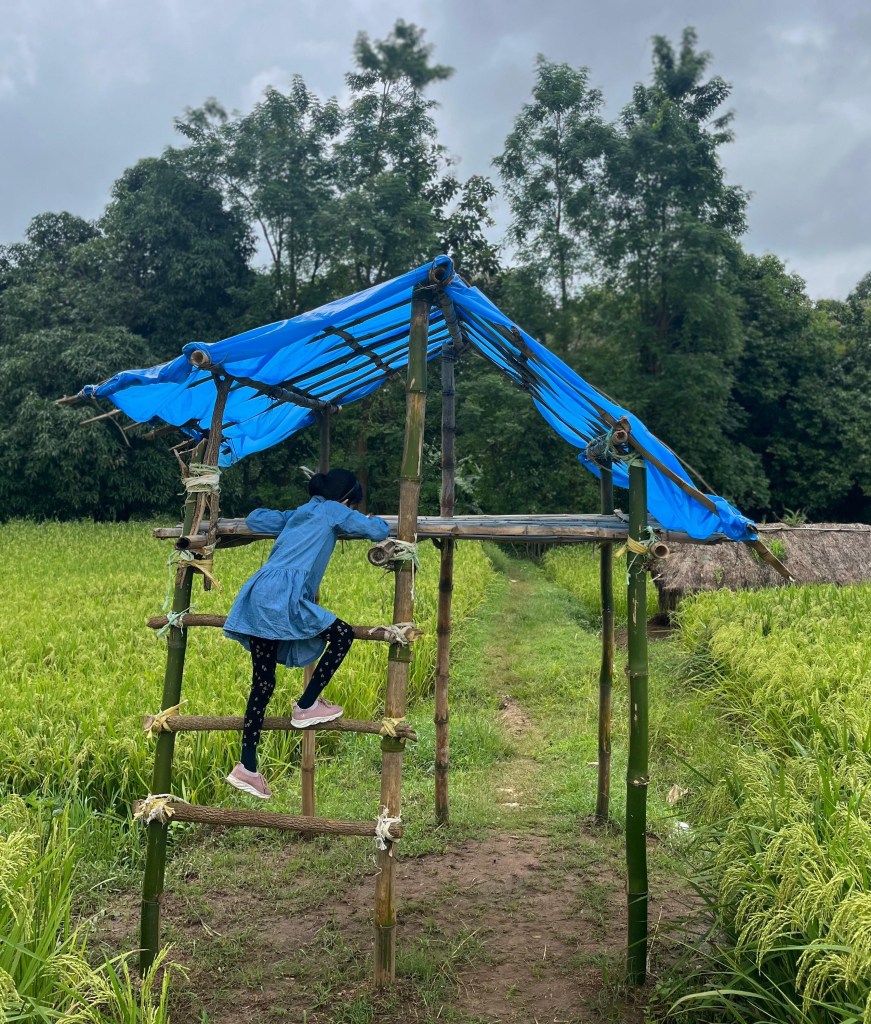
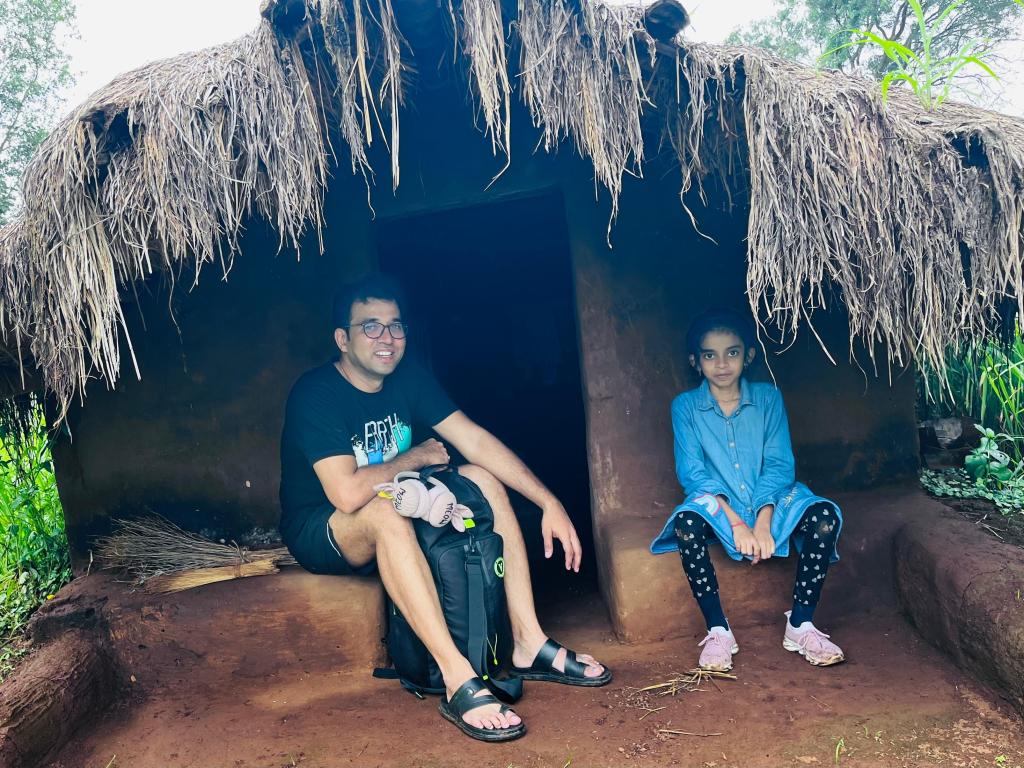
Then Siva uncle showed me the Mancha — a bamboo hut raised above the ground. It is used as a temporary shed for resting. My father said that sitting on the Mancha and gazing at the lush green rice fields was one of his favorite pastimes when he was a child. We all sat there for a while, enjoying the view and the gentle breeze.

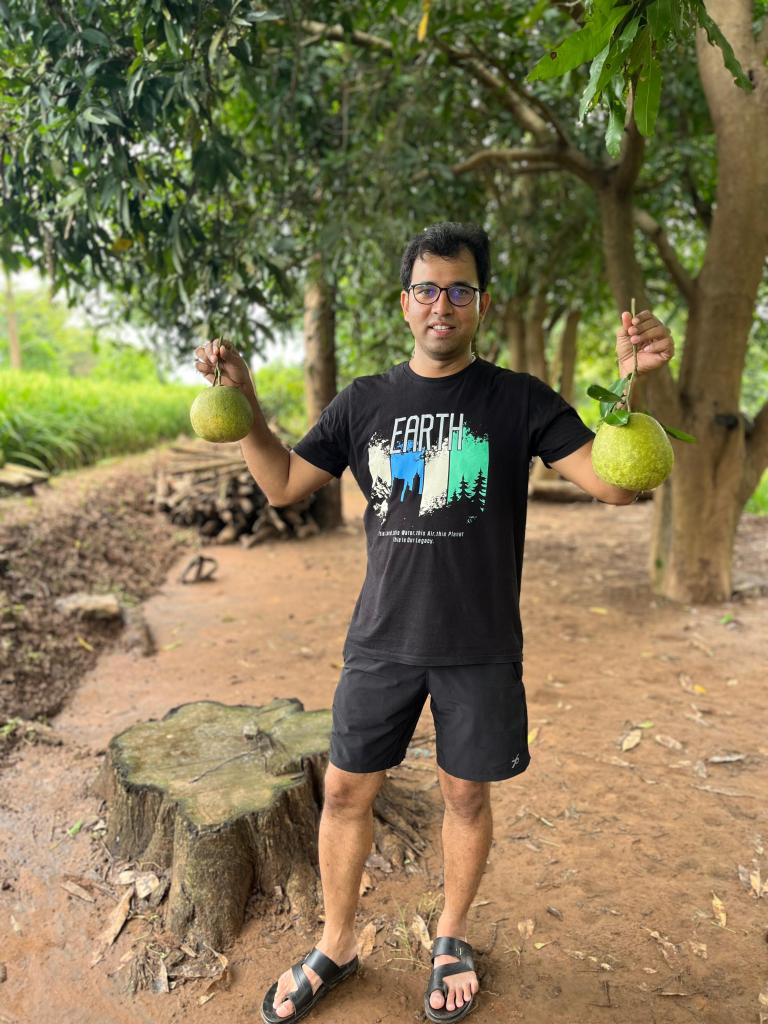
Next, my father took me to a kaccha house near the Mancha. It was made of mud and polished with cow dung. Many small agricultural tools were stored inside. My father and Siva uncle plucked some pomelo fruits for us, and my father also harvested a whole bunch of bananas from the field.

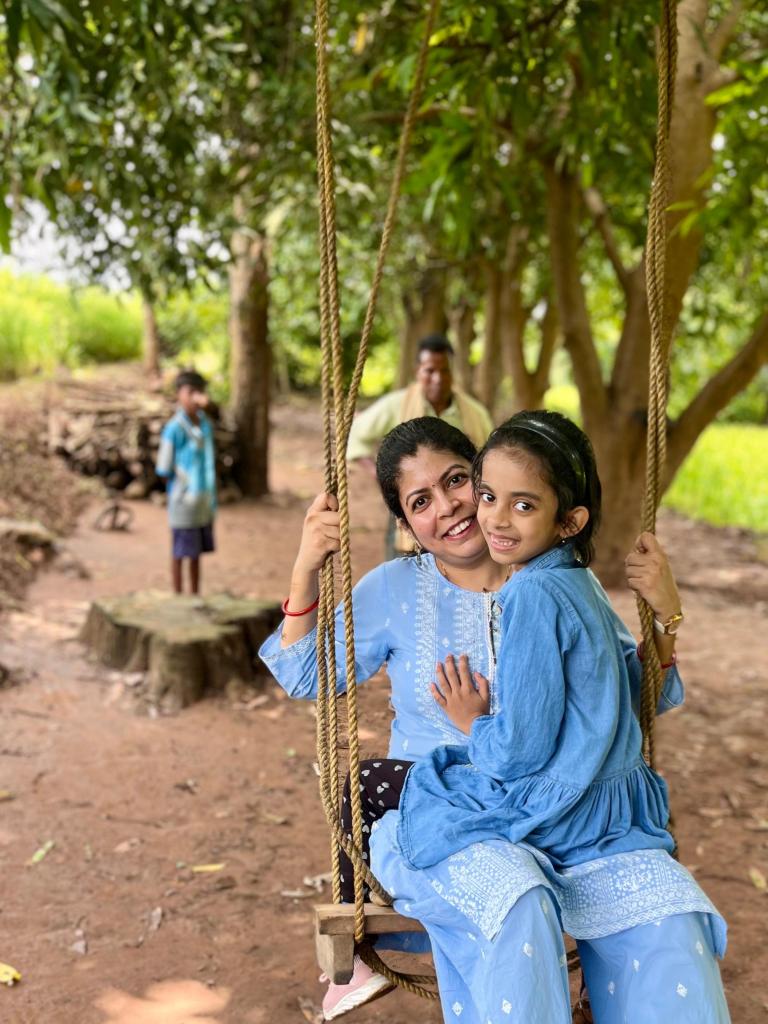
Then came a big surprise! Siva uncle had brought a swing for me. He tied it to one of the branches of the mango tree. Soon, my mother and I began swinging together. We went up and down, laughing and enjoying every moment of the ride.

Bhoomi enjoying the swing with mother

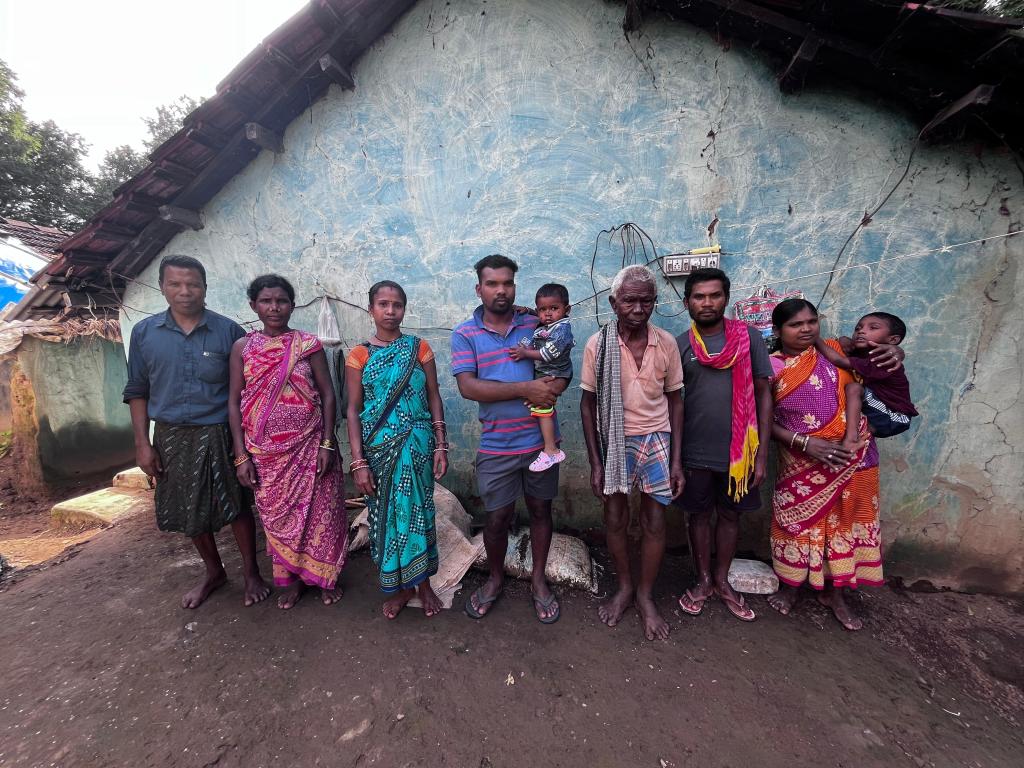
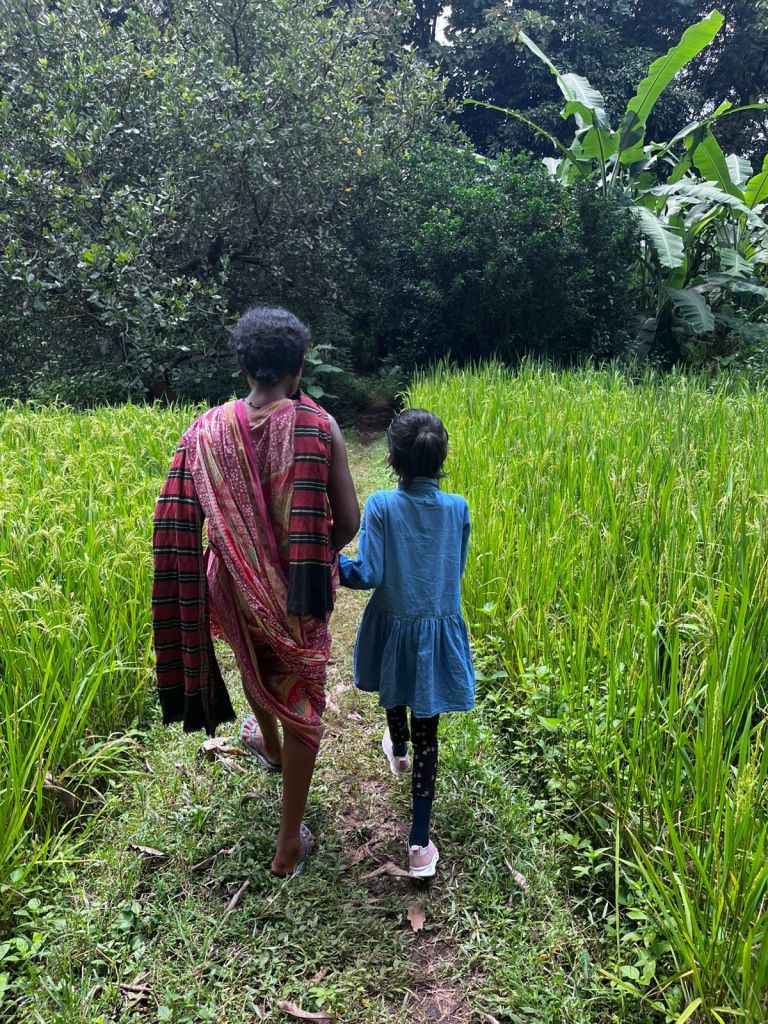
After some time, Siva uncle invited us to his home, which was on the other side of the river. As the water level was low, my father carried me on his shoulders, and we crossed the river to reach his village, Kastiguda. Siva uncle’s home was a small kaccha house, but it was very beautiful inside. He lives in a joint family with his father, two sons, two daughters-in-law, and two grandchildren. Since it was festival time, we gave them new clothes, sweets, chocolates, and toys for the kids. They, in return, offered us some fruits and local sweets.
Bhoomi with Siva uncle’s wife

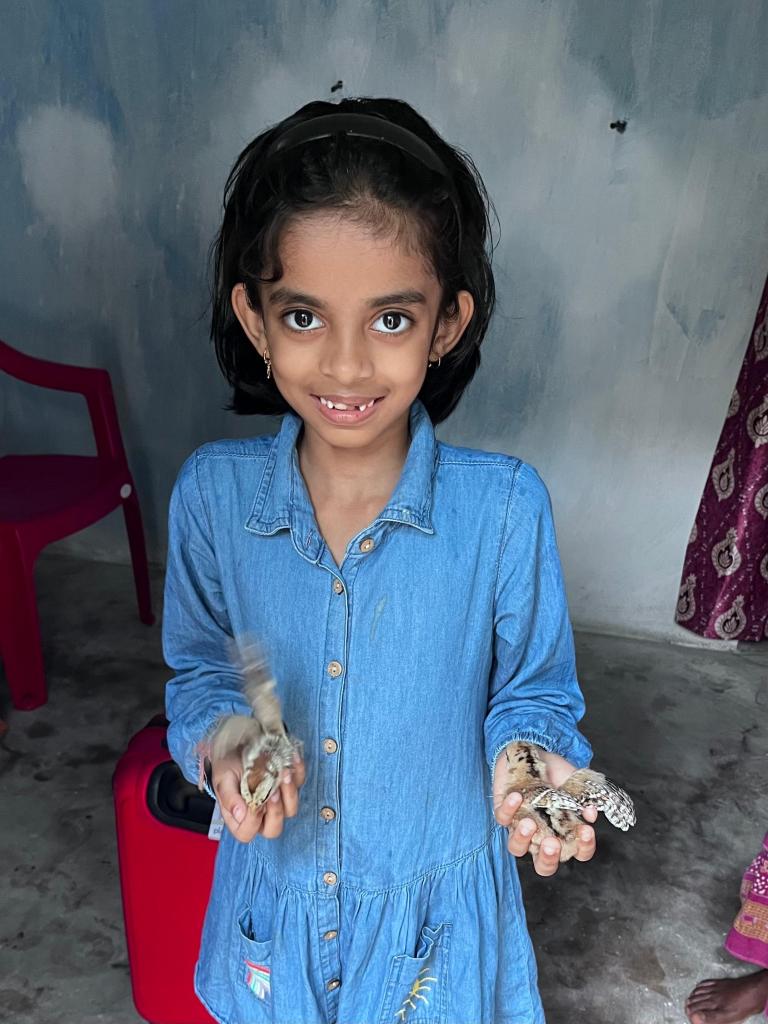
In the backyard, I saw a mother hen with her tiny chicks grazing together. I asked my father to get the chicks for me. My father and Siba uncle’s son helped catch them, and soon I was holding them in my hands. I played with them happily, but they started chirping loudly, calling for their mother. The hen was watching me from a distance. When I went near to return the chicks, the mother hen suddenly jumped and pecked my leg with her beak! I got scared, but everyone laughed. My father smiled and said, “This is normal for any mother. They are always very protective of their children.”
Bhoomi holding the chicks

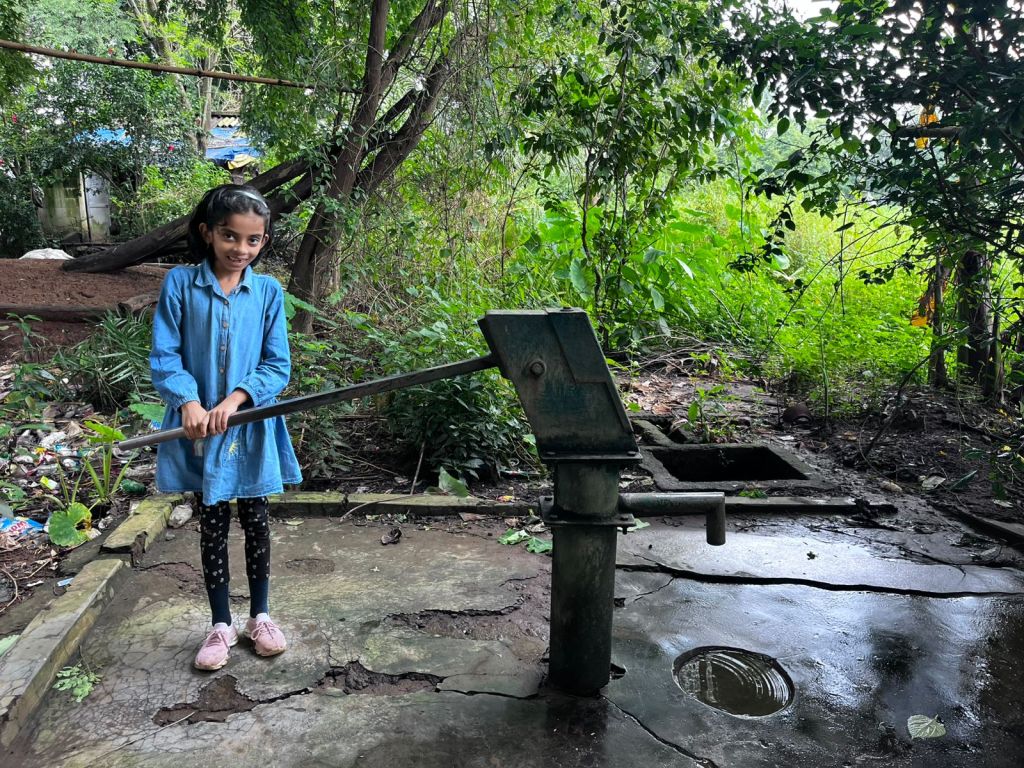
Later, my father showed me a hand pump in front of Siva uncle’s house. I had never seen one before because we live in a big city. He showed me how to pump water. It was a bit hard for me, but I still managed to get some water out. It was such great fun!

What I Learned

This trip to Indravati was one of the most special journeys of my life. I learned how beautiful and peaceful village life can be. I saw how farmers work hard to grow food and take care of nature. I also understood how much love and care people in villages share with each other.

It made me feel proud of my father and grandfather, and grateful for the beautiful memories they have given me. I will always remember this trip and hope to visit Indravati again soon!

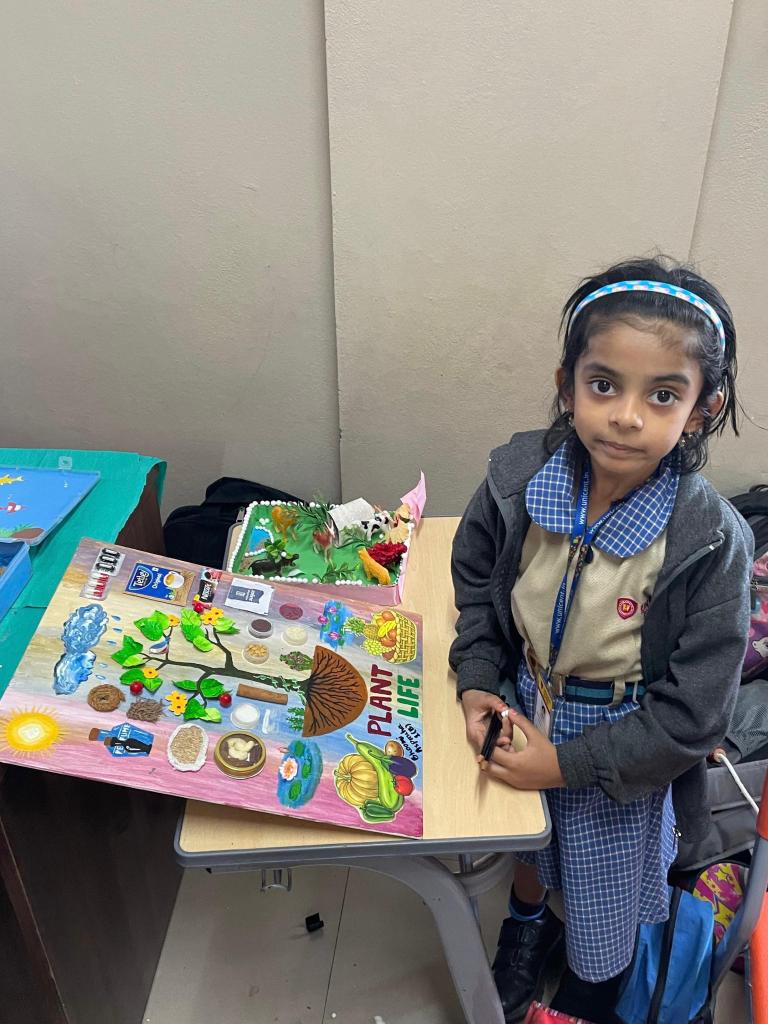
The Benefits of Plants for Human Life

Plants are the foundation of life on Earth. They give us everything we need to live, grow, and stay healthy. From the food we eat to the air we breathe, plants support every part of our existence.

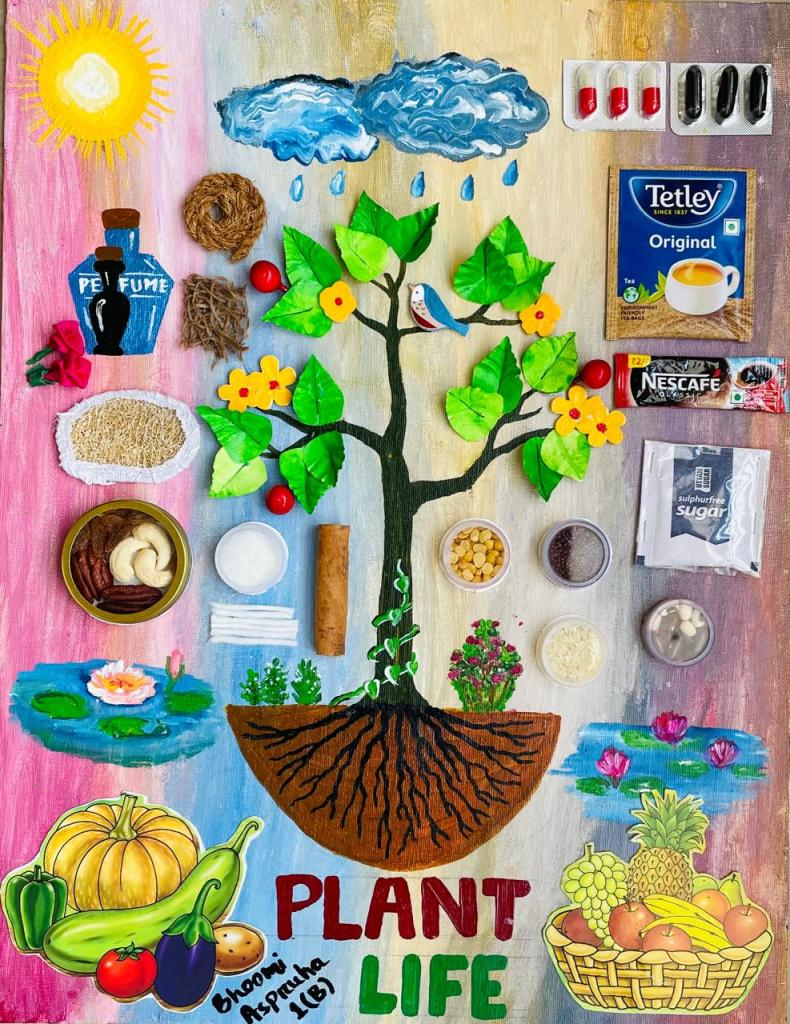
They provide oxygen through photosynthesis, making our planet habitable. Plants give us food in the form of fruits, vegetables, grains, pulses, and nuts that nourish our bodies and keep us strong. They are the source of spices, tea, coffee, and sugar, which add flavor and energy to our daily lives.

Plants also contribute to medicine and health — many modern medicines and traditional remedies come from plant extracts. From perfumes that add fragrance to fibers that make our clothes, plants touch every part of human life.

They help maintain the balance of nature by absorbing carbon dioxide, releasing oxygen, preventing soil erosion, and giving shelter to countless living organisms. Even emotionally, plants and greenery bring us peace, beauty, and happiness.

In short, without plants, life on Earth would not exist. They are our silent supporters, giving us everything — food, air, shelter, medicine, and joy.