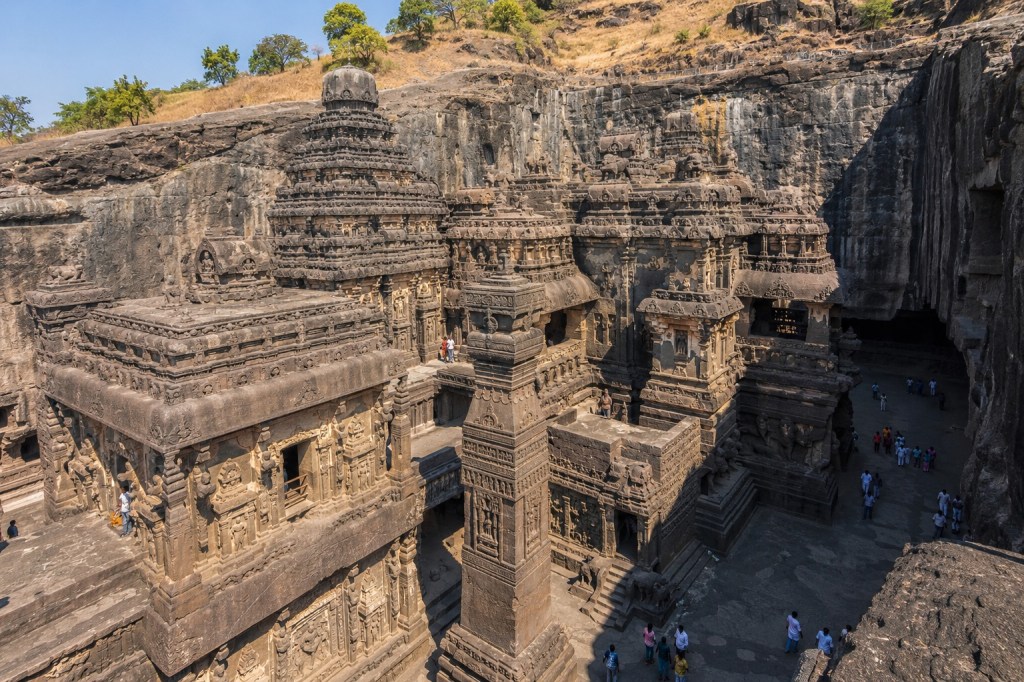
The Amazing Kailasa Temple – A Wonder Carved from One Rock 

When we visited the Ellora Caves, we saw one of the most amazing places I have ever visited – the Kailasa Temple. At first, I thought it was just another beautiful temple. But when my father told me how it was built, I was completely surprised!

Most temples are built by placing one stone on top of another, just like building a house. But the Kailasa Temple was made in a completely different way. The workers did not bring stones from somewhere else. Instead, they carved the entire temple out of one giant mountain of rock.
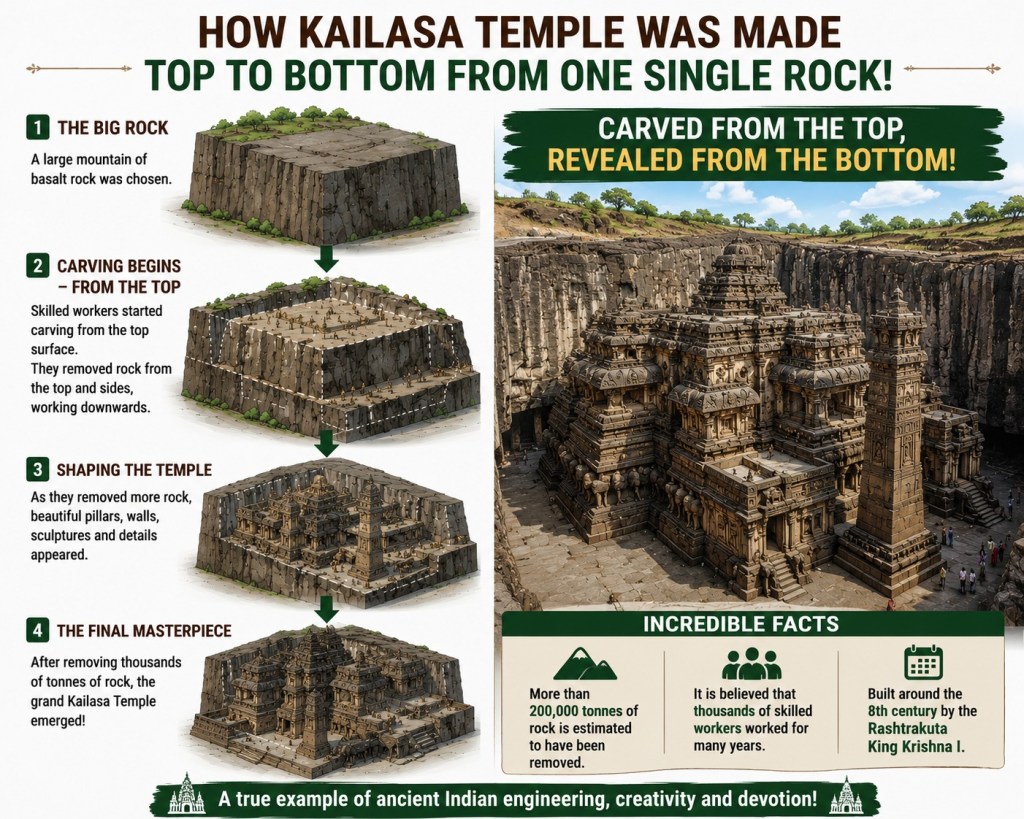
The most unbelievable part is that they started carving from the top and slowly moved downward. Imagine making a beautiful statue by first carving the head and then the rest of the body without making any mistakes. If even one big mistake had happened, they could not simply replace the stone because the whole temple was one single rock!

It is believed that the builders removed thousands of tonnes of rock to create this masterpiece. They carved beautiful pillars, stairways, elephants, statues of gods and goddesses, and detailed designs directly into the rock. Every corner of the temple shows the incredible skill and patience of the artists.
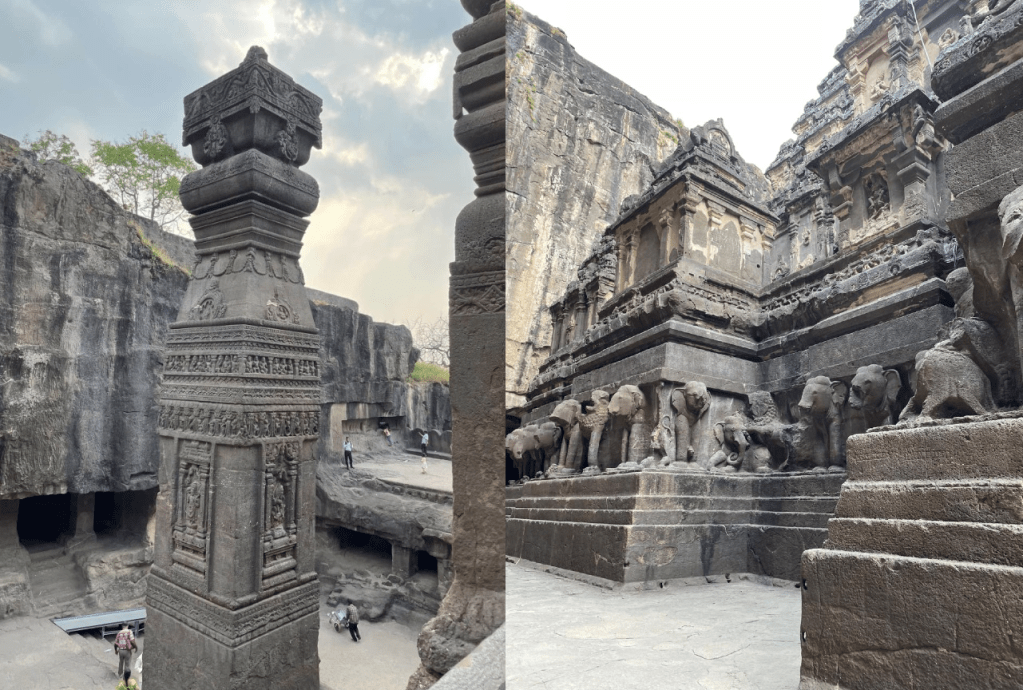
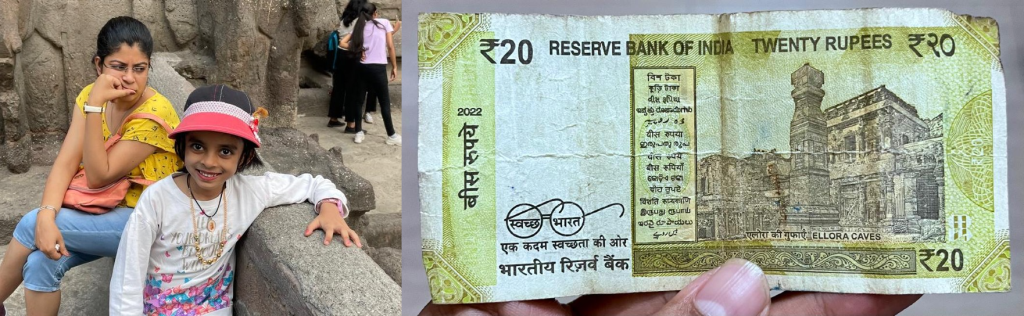
While walking through the temple, my father pointed to one of its beautifully carved stone pillars and asked me, “Does this look familiar?” I looked carefully but could not guess. Then he took out a ₹20 note from his wallet and showed me the back of it. I was amazed! The famous Kailasa Temple at Ellora, including its magnificent stone pillars, is featured on the reverse side of India’s ₹20 note.

I had seen this currency note many times before, but I had never noticed what was printed on it. It made me realize that we carry a picture of one of India’s greatest architectural wonders in our pockets every day without even thinking about it. After visiting the temple in person, the ₹20 note became much more special to me. Now, whenever I see one, I will remember this incredible place and the brilliant people who built it more than 1,200 years ago.
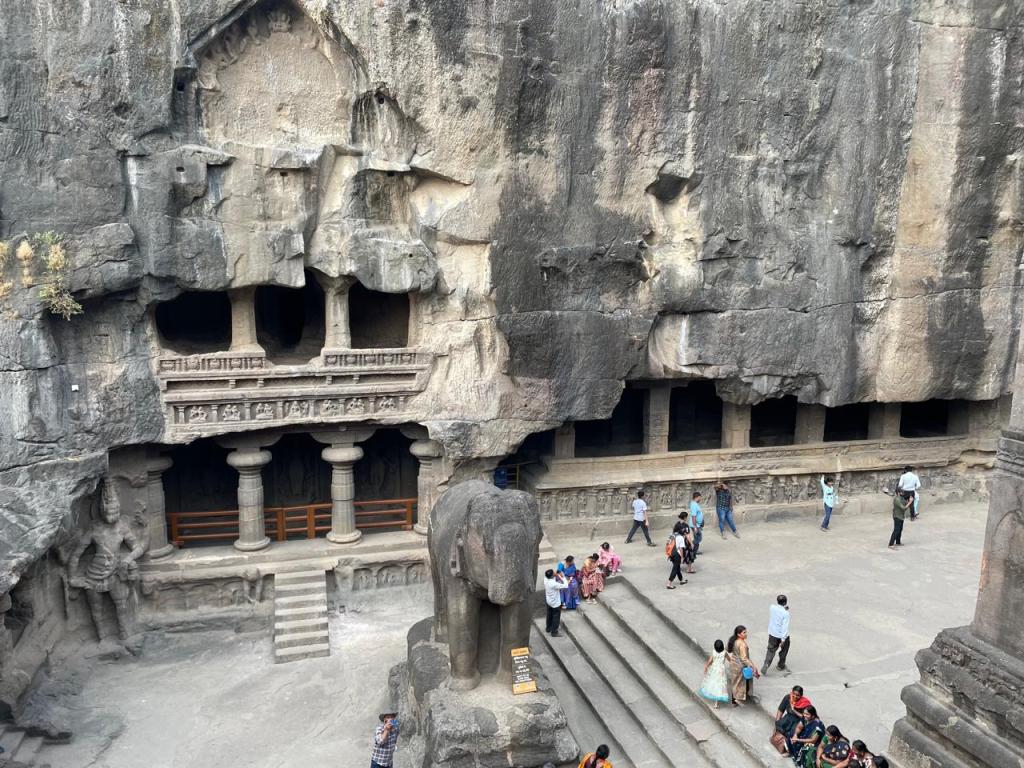
When I stood there, I wondered, “How did people build something so huge without modern machines, cranes, or computers?” They only had simple tools, but they had great knowledge, careful planning, teamwork, and years of dedication. Their hard work created a monument that still amazes people more than a thousand years later.

The Kailasa Temple taught me that when people have determination, patience, and excellent planning, they can achieve things that seem impossible. It also made me feel proud that India is home to such an extraordinary engineering and artistic wonder. Visiting this temple was like stepping back in time and seeing what human creativity can achieve. I also learned that some of our country’s greatest treasures are not just found in museums—they are carved into mountains, preserved for centuries, and even printed on something as simple as a ₹20 note.
Exploring Chitrakote: India’s Widest Waterfall and Its Hidden Treasures

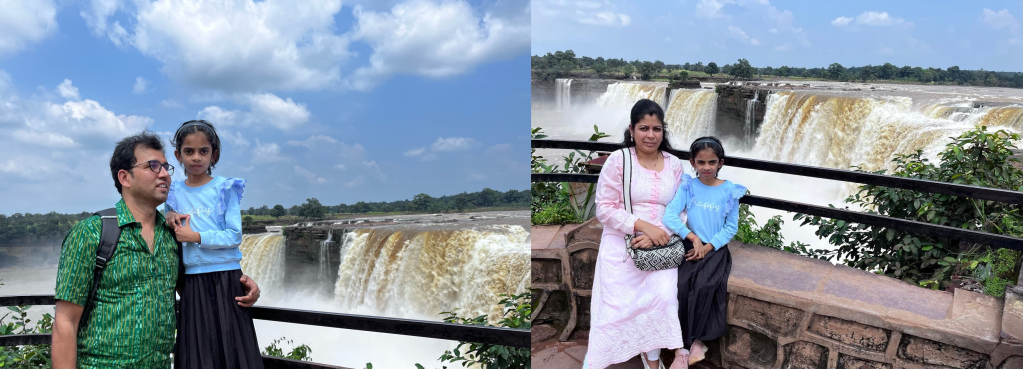
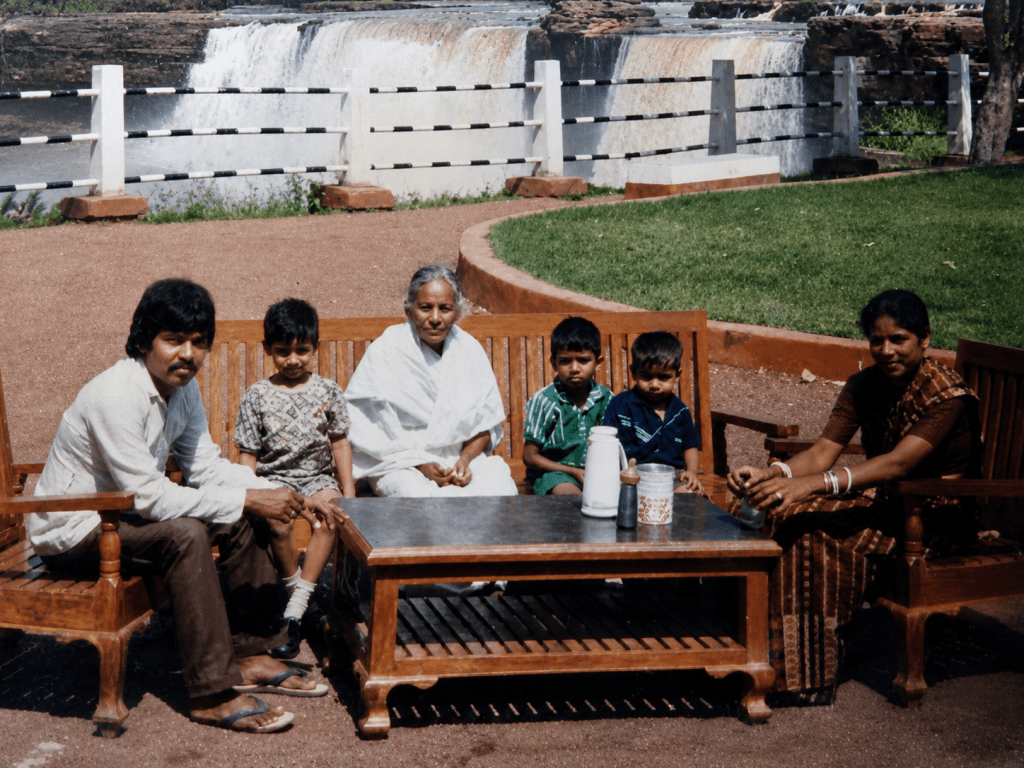
The next day, after visiting the Tirathgarh Waterfall, we had a flight to Hyderabad in the evening. So, we had some free time in the morning. We had an early breakfast and then started for the Chitrakote Waterfall. My father kept telling me that he had visited this waterfall when he was of my age with his parents, brothers, and grandmother. But he said he did not remember anything about the visit except for a family photograph that he had seen during his childhood. It was one of the very few family pictures they had from those days.

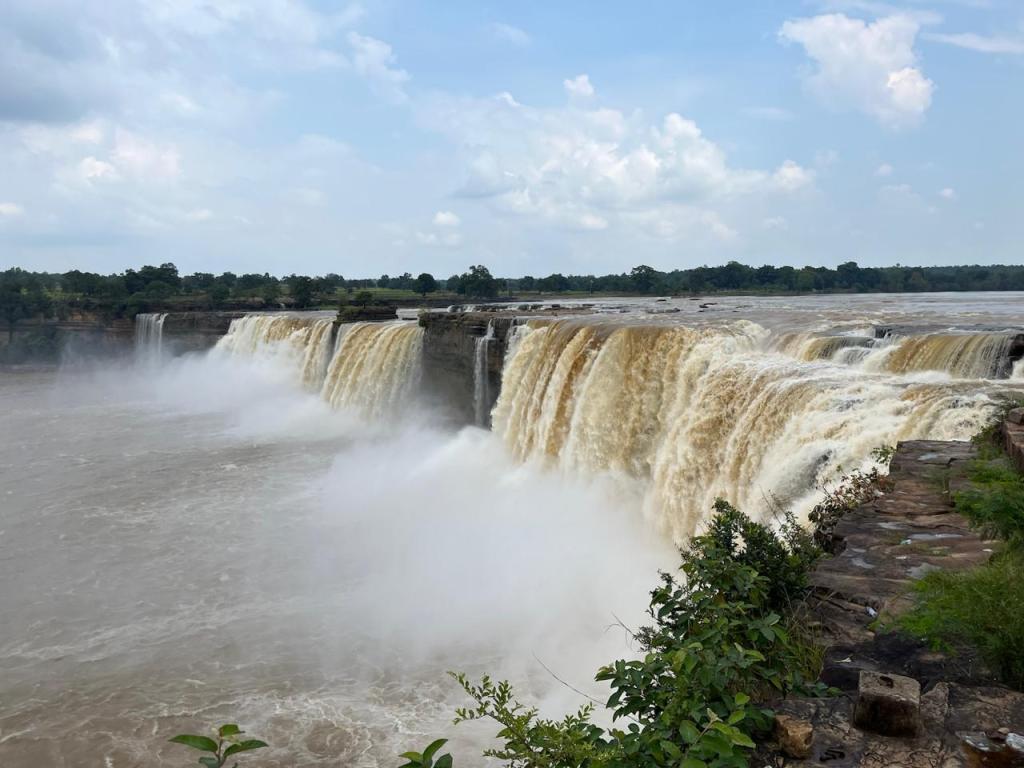
We reached the waterfall at around 11 a.m. It was not like the previous day’s waterfall where we could go near the water. This waterfall was huge. I think because it had rained the previous day and in the nearby areas, the water was muddy. The water flowing over the falls was mixed with mud, so although it created a beautiful white mist as it fell, the waterfall itself looked yellowish-brown.

It is located on the Indravati River in the Bastar region of Chhattisgarh. It is the widest waterfall in India, spanning about 300 metres (980 feet) during the monsoon. The waterfall has a height of about 29 metres (95 feet). During the rainy season, the falls become especially spectacular as the entire width is covered with rushing water. Chitrakote Falls is popularly known as the “Niagara Falls of India.” Its magnificent horseshoe-shaped cascade and roaring waters create one of India’s most breathtaking natural wonders.

While Mom and I were enjoying the view, my father went around trying to find the place where they had taken their childhood photograph. In the picture, there seemed to be a table arranged like it belonged to a nice hotel, with the waterfall just behind it. But Father could not find such a place. Now the area is much more crowded. Although he found a guest house nearby, there was no quiet spot where he could see the waterfall in the background like in the old photograph. He thought his father must have spent a good amount of money to stay at that hotel or guest house.

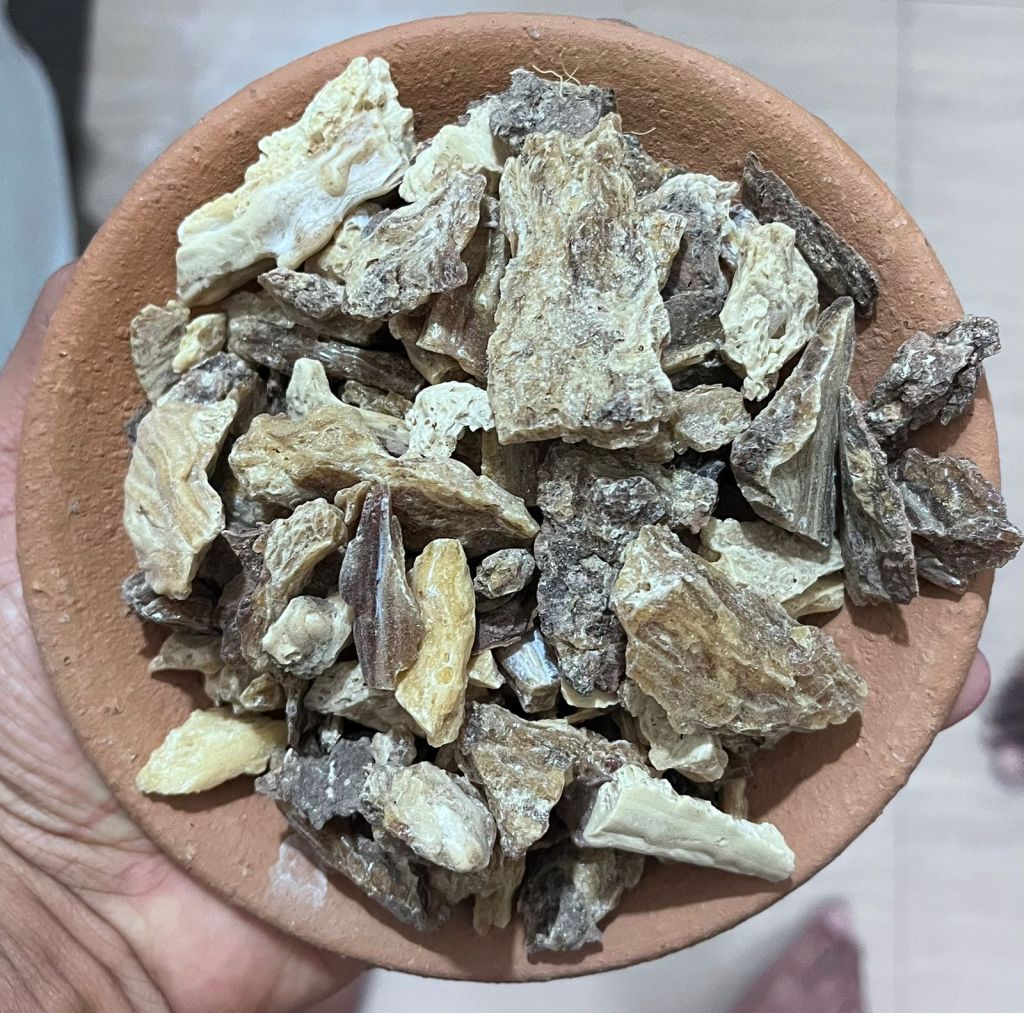
Then we walked around the local market. I saw many local people selling tree bark and small stone-like substances. My father smelled them and told me they were called “Jhuna.” After talking to the local people, we came to know that this region is surrounded by dense Sal forests. The local tribal communities collect the naturally hardened resin from Sal trees and sell it to tourists as Jhuna or Sal resin. When placed on hot charcoal, it gives off a deeply aromatic and fragrant smoke that is used for purification and religious rituals. My father told me that during his childhood, my grandmother used to burn Jhuna every evening, and he loved its fragrance. He even bought one kilogram of Jhuna. He also told me that it works as a natural mosquito and insect repellent.

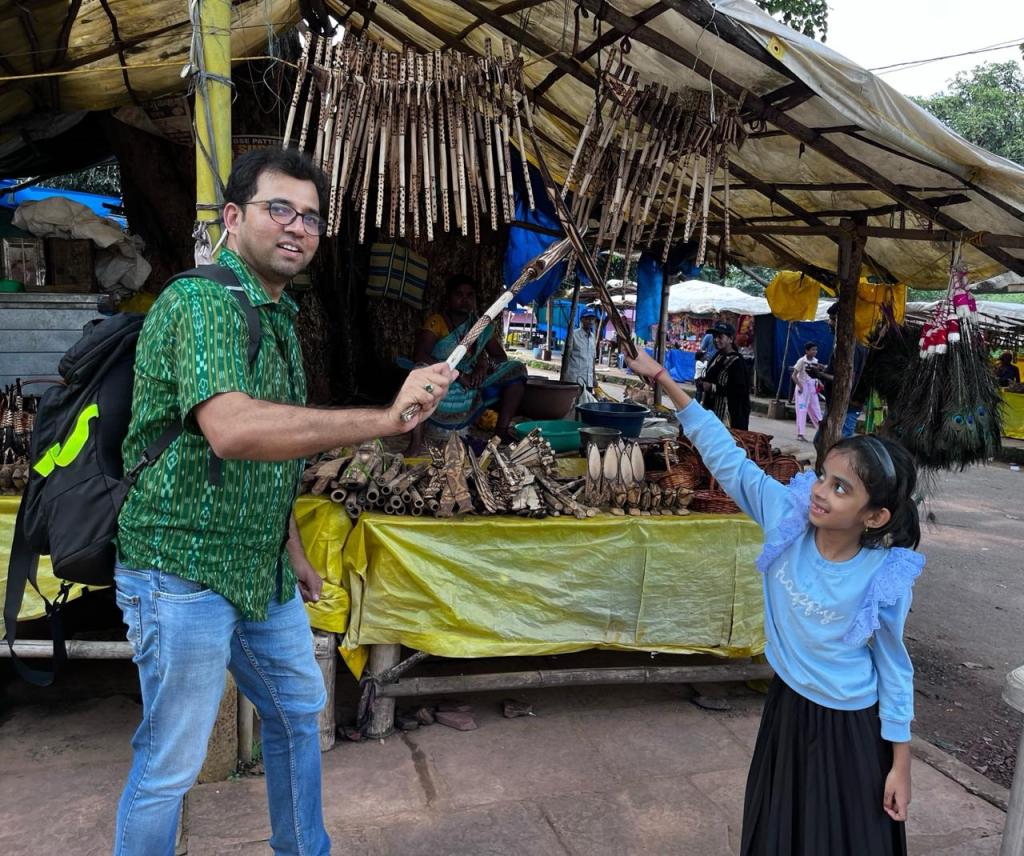
While walking around the other shops, we saw many wooden weapons like the ones carried by Gods and Goddesses in pictures and temples. Again, we thought they must have been made from the Sal trees growing around the area. Then we started holding some of the wooden weapons, and my father and I pretended to fight with them. My father was making funny demon noises, and we had a lot of fun. He said, “Let’s buy them and practice fighting at home.” Although my mother was not willing to buy them, my father finally convinced her. They cost only ₹150 each. He said that we should support the local tribal community by buying such handmade items. They usually do not have the facilities and opportunities that people in big cities enjoy. So, whenever we visit places like this, spending a small amount on local products is like helping a family. My father also said that we would use these wooden weapons in some performances so that Mom would not feel we had wasted the money. I was super excited to see what kind of performance we would do with them.

By this time, it was already 1 p.m. So, we had to leave for the city, have lunch, and then head to the airport. Driver Uncle started driving us towards the city.

This trip taught me that old family memories are very precious. Even though my father could not find the exact place where his childhood photograph was taken, it was wonderful to hear his stories and imagine how the place looked many years ago. I also learned that India is full of beautiful places, and every place has its own history, culture, and natural beauty. I was happy to know how the local tribal communities earn their livelihood by carefully using the natural resources around them, like collecting Sal resin and making beautiful wooden handicrafts. It made me realize that when we visit such places, buying local products is a small way to support their families and appreciate their hard work. This visit taught me that travelling is not just about seeing new places, but also about learning from the people who live there and respecting their way of life.

I came back with beautiful memories, the sweet fragrance of Jhuna, and two wooden weapons that remind me of the fun my father and I had together. Those memories are much more valuable than any souvenir.